



What is the difference between anxiety and panic attacks, what are their characteristics and how can they be cured? The experts' view.
Few stages of life involve as much disorientation or prejudice as adolescence. The transition from childhood to young adulthood is associated with apathetic behavior, with permanent mood swings and even certain disorders. These have even been exacerbated by the mandatory quarantines imposed during the health crisis. For this reason, Seguros SURA specialists offer advice to identify and overcome problems common to this stage of life.
María Juliana Gaviria, a doctor and director of the health capacity of the corporate office of Seguros SURA, states that “mental disorders, such as anxiety and depression, have always been present, especially in the adolescent population. However, they have been increasing.”
He mentions that, according to the National Institute of Health in the United States, no less than 1 in 3 adolescents suffer from anxiety and, in the last eight years, the number of cases in children aged 13 to 18 has increased by 20%. In addition, he adds, “suicide attempts among adolescents have doubled compared to the last decade.”
Adolescents are an age group that are in the sights of health professionals and, According to the World Health Organization (WHO), adolescents frequently suffer from emotional disorders. Anxiety disorders are more common among older adolescents than among younger ones. It is estimated that 3.6% of adolescents between the ages of 10 and 14 and 4.6% of those between 15 and 19 years of age suffer from an anxiety disorder. It is also estimated that 1.1% of adolescents aged 10 to 14 and 2.8% of those aged 15 to 19 face depression.
Effects of the pandemic
The Covid-19 crisis altered all aspects of life, and the mental health is no exception. According to the First Report of the Survey on Science, Health, Beliefs and Society in the context of the Covid-19 pandemic carried out in Argentina, the problems that people suffered the most were conditions related to mental health, such as anxiety disorders, depression and psychological illnesses. Also allergies and skin problems.
Gaviria also highlights that “according to WHO data, for the general population it is estimated that cases of depression and anxiety disorders in the world have increased by 28% and 26%, respectively, during the pandemic. This means that in 2020 there were 53 million more depressive disorders and 76 million more anxiety diagnoses than expected.”
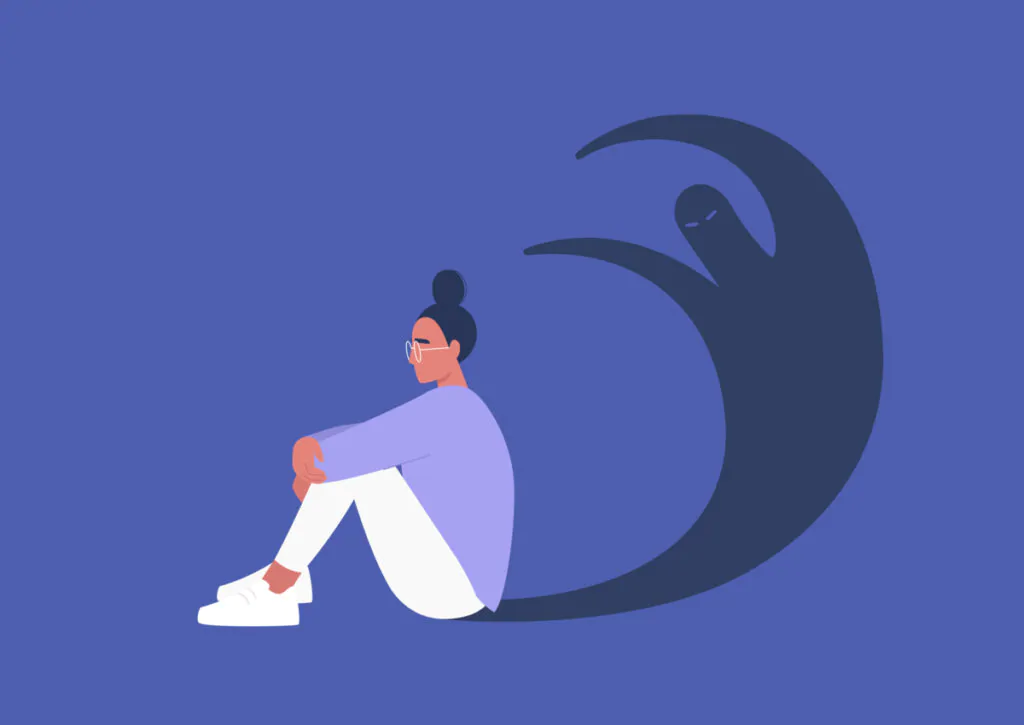
In the particular case of the mental health of girls, boys and adolescents in Latin America and the Caribbean, According to UNICEF's State of the World's Children 2021, 27% of young people in the region felt anxious during the pandemic, and 15% of children and adolescents live with a diagnosed mental disorder. One in five young people between 15 and 24 years old say they often feel depressed or have little interest in doing any kind of activity since the pandemic began.
Gaviria, an expert at Seguros SURA, acknowledges in a conversation with asegura de Vivir that “environments such as the pandemic or bullying can make teenagers feel afraid in open spaces.” The phenomenon of social networks is also an area to take into account. “Spending a lot of time there can alter one’s perception of oneself, influencing the young person’s self-esteem and leading to the prolongation of a state of anxiety,” she explains.
On the other hand, he suggests, the “high expectations” of recent generations “can generate anxious states, and going from studying virtually to returning to classes can cause generalized anxiety disorders.”
Difference between panic attack and anxiety
Javier Lazzati, a psychologist and neuropsychologist specialising in mood and anxiety disorders, explains that these terms are often confused. “Anxiety is a physiological and psychological response to different things that happen to us in life. Panic attacks are part of panic disorder, the main symptom of which is experiencing a high level of anxiety,” explains the specialist.
“This anxiety is different from what was initially described, since on the one hand it is very high; and on the other hand it is accompanied by other mental symptoms such as fear of going crazy or dying; and sometimes even depersonalization occurs.”
Lazzati adds that “this depersonalization is characterized by the perception that we see ourselves outside our body, we feel reality as strange and it is difficult for us to move our body. All this set of symptoms forms what we call: panic disorder.”

Panic attacks arise as a result of a specific event (for example, an accident) that generates high levels of anxiety and fear. “It is this fear that is experienced when experiencing something that generates so much fear that causes the brain to become overactive and, in the future, every time a similar situation is experienced, a panic attack is triggered,” he explains.
That is to say, the brain, when a panic attack occurs, “believes that there is a danger and that consequently it needs to activate the entire anxiety response to respond to that danger,” Lazzati concludes.
Panic attacks
El Doctor Daniel Lopez Rosetti The author describes the symptoms of a panic attack as “the sensation of intense fear, shortness of breath, palpitations, chest pain, sweating.” She also points out that these attacks do not last long. “From the onset of the symptoms we have just described to the peak of the symptoms, it takes about 10 minutes, 15 minutes at most, and then it begins to subside. It is a short period, but during that period the person has a very bad time and is also left with fear,” she explains.
Among the factors that predispose to the appearance of panic disorders, women are more likely to experience them. Psychologist Lazzati puts it in numbers: “Women are 2 to 3 times more likely to experience them than men.” He also points out that age is an important factor.
“Panic attacks occur before the age of 25,” he explains, “and there are certain types of personality traits that make a person prone to developing panic disorder. This is seen in people who have anxiety as a core personality trait.”
How to cope with a panic attack
When faced with an anxiety or panic attack, María Juliana Gaviria explains that “you have to stay calm and support the person.” And she lists some tips to consider:
- If you know that he or she is taking any medication for this disorder, offer him or her the medication.
- Try to take the person to a quiet place.
- Help him focus by asking him to repeat a simple but physically tiring task, such as raising his arms above his head.
- Help slow the person's breathing by breathing with them or counting slowly to ten.
On the other hand, Gaviria points out that “when a person is having a panic attack, it is useful to say things like: “You can overcome it”, “I am proud of you”, “You are doing a very good job”, “Let's breathe together”.
Fear of fear
This is what anticipatory anxiety is called. “The person believes that a panic attack is about to break out, which generates fear and triggers the panic attack. The vicious circle is completed, confirming the hypothesis that was initially proposed: “I was right, I was about to have a panic attack; it was all a mistake in the initial interpretation,” Lazzati sums up.
Nothing is lost when faced with emotional disorders. In this regard, Javier Lazzati, psychologist and neuropsychologist, concludes that “it is important to know that anxiety disorders, such as panic disorder, have very effective psychological treatments that allow the person to lose their diagnosis in a short time and lead a calm and pleasant life without waiting for the moment of their next panic attack to appear.”
It is important to be aware of how reality affects the mental health of oneself and of the people around us. Asking for help is part of living in a community. Therefore, SURA Insurance accompanies the growth of young people during adolescence, a period of many changes and transformations.