


According to a study by the consulting firm Tsunami LATAMIn 2021, for the first time in a long time, Latin America went from being considered a young region to a longer-lived one. Factors such as scientific and technological development, population growth with higher levels of education, and the economic conditions of each country are shaping the demographic pyramid, creating new dynamics among the younger generations, as well as in the older age groups.
According to a 2021 study by the Economic Commission for Latin America and the Caribbean (ECLAC)In Latin America, there are differences between countries regarding the probability that elderly people have of living in poverty or extreme poverty.
Camilo Caro, financial manager of the RGC Activa Consulting Firm, explains that in countries with a more consolidated pension system such as Brazil, Chile, Costa Rica and Uruguay, people over 64 years of age are less likely to live in such situations than younger people, while in countries such as Honduras, elderly people have higher levels of poverty than people between 40 and 64 years old and very similar to the age range between 16 and 39 years old.
That is why, Thinking about well-being involves projecting into the future and the possibilities that will be available in old age. In the region, as Alfonso Mejía, an economist at the Universidad de los Andes, explains, “older people do not have a guaranteed retirement, either because they worked in the informal sector or were unable to make contributions for the minimum period of time established.”
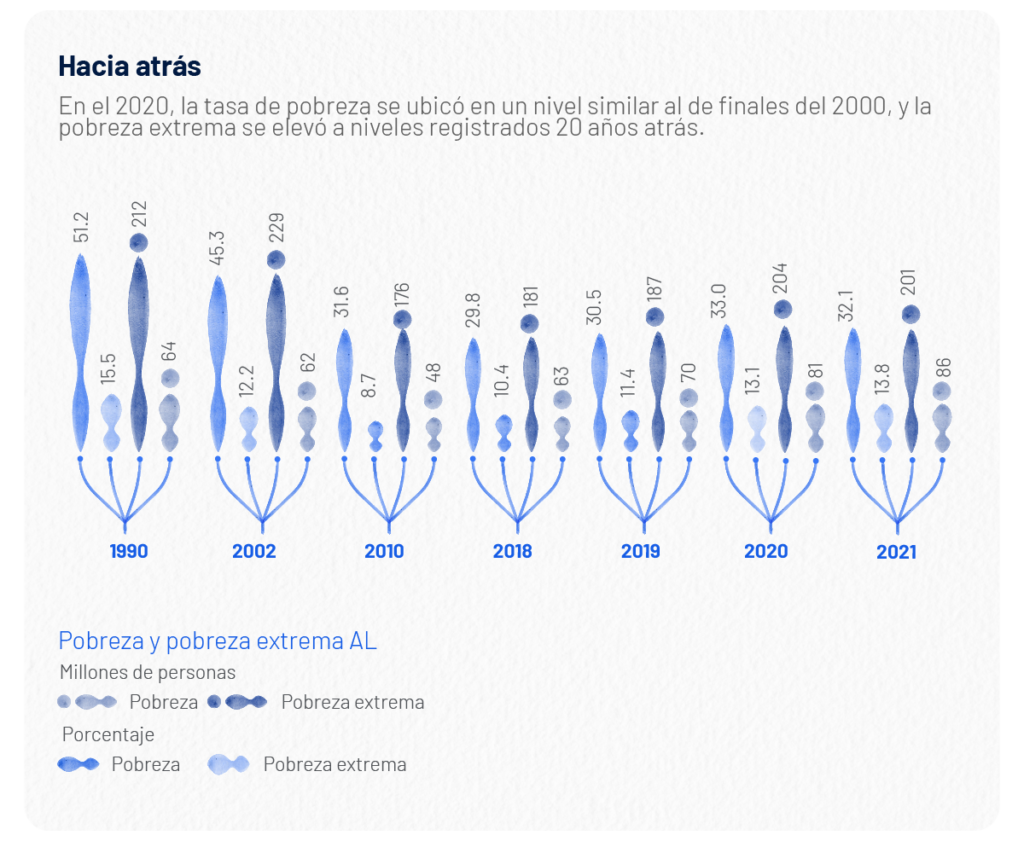
In addition to informality and unemployment, Mejía points out that “only 4.3% of Colombians are retired, which is a symptom that people did not save or there was no possibility of saving.”
The financial instability of older adults is due to the fact that “there is no solid income base” which includes, in addition to savings and retirement, income from assets or employment.
Healthy financial practices for reaching old age
In order to have a peaceful old age and economic stability, it is enough to have a few simple daily financial practices that should be implemented from a young age. Mejia says that “the healthiest financial practice par excellence is to spend less money than you earn, so you can save. Usually, people hope to get promotions or higher incomes, but instead they should opt for austerity, living a lifestyle in line with their income and avoiding taking on debt or abusing it.”
For this, Proper control of monthly income and expenses is essential, for which it is necessary to make a personal budget, ideally from the beginning of one's life in the working world. Caro explains that in this "one must define the percentage of income to be allocated to different expenses, differentiating between basic expenses (such as housing, food, health, services, and transportation) and those that can be classified as fun or recreation."
This division shows that there are certain expenses that cannot be changed because, in addition to meeting basic needs, the money spent to cover this expense “depends on the economic reality of the country in which one lives, especially on macroeconomic factors such as inflation and the interest rate, so there is little that can be done to modify it.”
However, with the money from the second group, changes can be made and "prudent decisions can be made, always seeking to allocate a percentage of income to savings. Ideally, the percentage allocated to this item should be between 5 and 10%," says the financial manager.
In addition to savings and financial planning, Another healthy practice is investment. Although savings are a huge step, they are not a very smart decision on their own, especially in countries with unstable and constantly devaluating currencies. However, investments should be profitable in the long term.
In this regard, Mejía highlights property and education as good investments, but warns that "many people cannot make investments for the future due to a lack of economic and social opportunities."
When asked how to make good long-term investments, Caro clarifies that “they must have an acceptable level of risk, for which it is always advisable to seek the advice of personal finance specialists who provide advice on how to diversify the investments to be made, whether they are in fixed income, variable income, real estate, or alternative assets, among others.”
Financial health is important!
La financial health is based on three pillars: that income can cover basic needs and leisure, that there is savings capacity to invest to generate returns and that these savings can be used in the long term. In this sense, Caro comments that good financial health “helps to ensure that the probability of falling into poverty or extreme poverty in old age is minimal.”
Mejía says that “financial health is important because it provides stability, ensures a minimum living wage, a peaceful old age and quality of life. The consequences of not having healthy financial practices are manifested in phenomena such as children having to financially support their elderly parents.”
Having financial stability and peace of mind during old age is only possible if smart financial decisions are made throughout one's youth. That is why implementing the simple practices suggested by experts are fundamental steps to guarantee a healthy financial future.
SURA Insurance accompanies its clients in this process throughout their lives, protecting fundamental aspects such as education, work and life. Its insurance policies are tailored to those people who are interested in their finances, understanding that these influence their quality of life and emotional balance.