



According to International Labor Organization (ILO)Productivity in the economies of Latin America and the Caribbean, measured as the ratio between GDP and hours worked by their workforce, stood at $17,7 in 2021, below the world average ($18,9), the International Labor Organization (ILO) reported today.
Luis Ramón Ramos Espinoza, IT Vice President of SURA, argues that some of the factors that influence low regional productivity are the "government's willingness to facilitate access to technologies and create educational models around them.” At the same time, he adds that there is a lot of ignorance about the possibilities of democratization that are offered today, “mainly in information technology, which would create easy access for people in our countries to develop knowledge on the subject.”
“We are on uneven ground,” Ramos Espinoza warned, because “we have a significant need for education, training and knowledge about technologies, but there are also non-technology-based responses, such as the great weight that commoditized products and services have in our economies, which generate income and jobs but are not necessarily the instruments that facilitate the development of productivity in the region.”
What technologies should companies incorporate?
The expert stressed that there is a very important point in terms of productivity related to the size and characteristics of companies. “An important factor – he says – are tools linked to work automation,” and lists:
- Industrial robotics
- Automation through robot
- Implementation of technological solutions
 For the IT vice president at SURA, “we need to be able to train, design and teach robots.” This is, from his perspective, the main challenge facing Latin America. Along these lines, Ramos Espinoza highlights that it is key to incorporate certain technologies y skills within organizations:
- Cybersecurity
- Cloud technology
- hyperautomation
- Hybrid work model
- Sustainable technology
- Blockchain
- NFT
- Metaverse
The specialist places special emphasis on the informatic security. The Report Panorama of Threats in Latin America 2021 de Kapersky, an international company specializing in the subject, indicates that computer incidents showed an increase of 24% in 2021, with Brazil, Peru, Panama, Guatemala and Venezuela leading the list.
Technological gap between countries
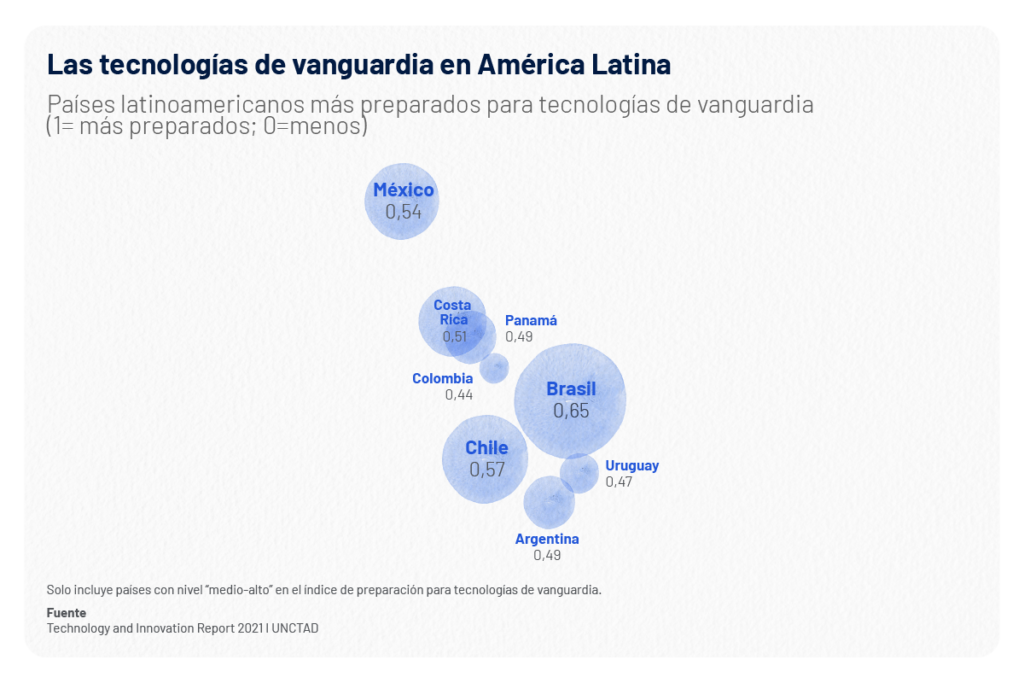
Democratising access to technology remains a pending task in the region, according to data from international organisations. A report by the World Bank shows that less than half of Latin Americans have fixed broadband connectivity. The implementation of technologies is advancing more rapidly in some countries.
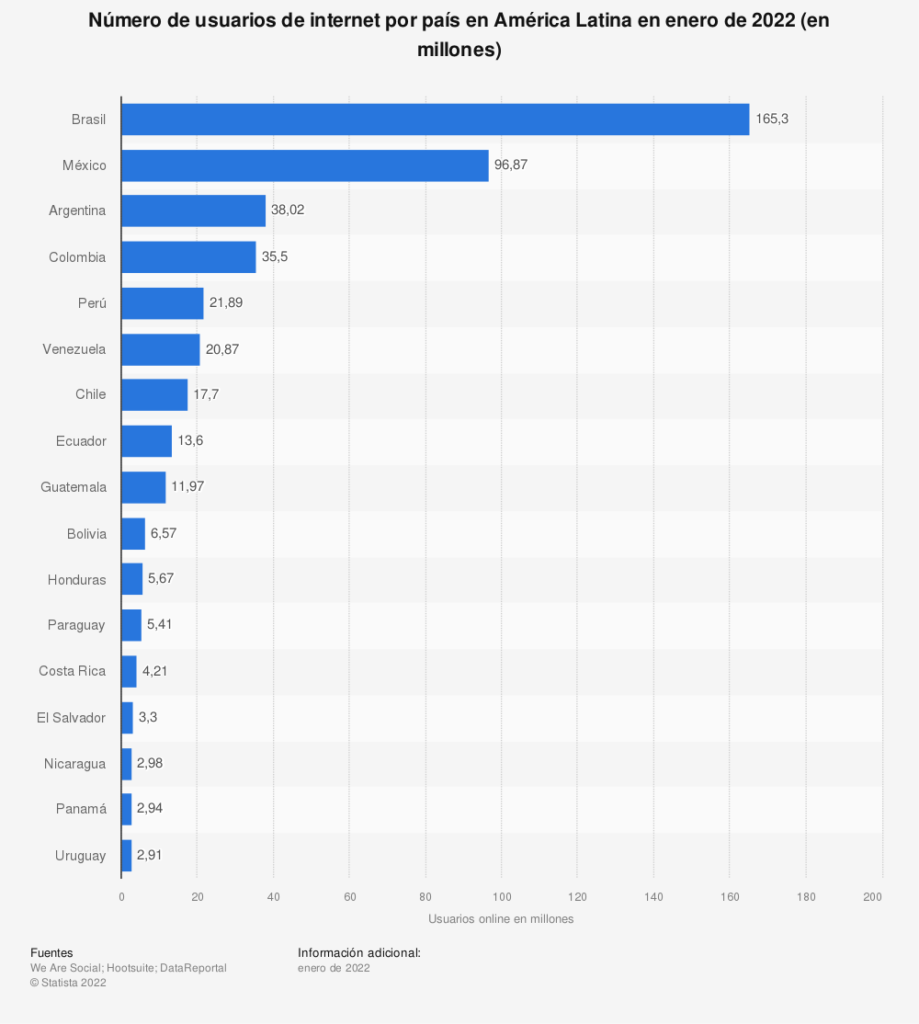
The implementation of technologies is advancing faster than in the rest of the region and several operators have already begun to offer 5G connectivity and equipment to their users,
Regarding the technological gap that exists in the region, the VP of Technology at SURA shares with asegura de Vivir that “the collaboration of the business community, its cooperation and co-creation of programs, human and technological resources is key.”
“Technology alone does not solve anything. It makes great contributions on its own, but people have to make the exercise of adoption and evolution,” he says. In this sense, he points out the cases of Japan and South Korea as good examples of development, “since they knew how to create a specialized workforce and understood that development requires talent, an essential factor to reduce the gap.”
At Seguros SURA we understand that technology is probably the main factor of change in the current environment. Through it, businesses are strengthening their strategies with new opportunities through innovation and productivity.
Today's trends suggest a more people-centered approach, as technology will never stop evolving, and it is clear that the competitive advantage will be held by those people and companies that best know how to appropriate or use it for their benefit.