

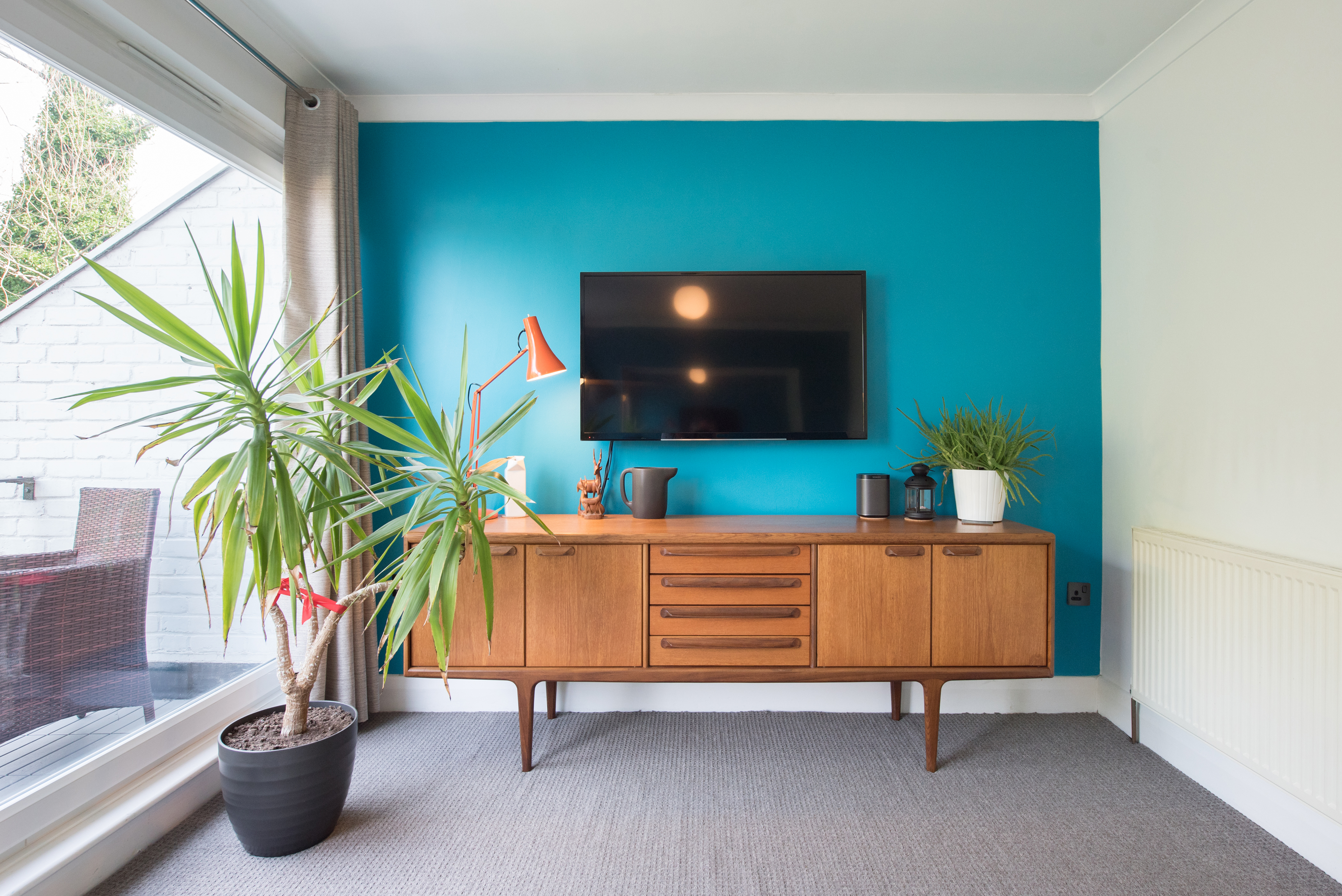
They have just what is necessary. They are usually no larger than 40 square meters and some of them are powered by sustainable energy. A new form of housing that is gradually gaining followers in Latin America.
The growing urbanization and mobility towards cities that has taken place in recent decades has generated a radical transformation of the available space. New gaps have emerged as a result of this phenomenon, which has been further enhanced in the era of hyperconnectivity and changed the way we relate and consume.
The rising The concentration of the population in cities also impacts the construction structures of the home. From an architectural perspective, we can see the urgent need to make the most of every space, an increasingly scarce commodity in large cities. This also impacts the design of home accessories, which are increasingly smaller and designed for these new structures.
In this context, in which a redefinition of space occurs, the phenomenon of the Tiny Houses. The 'tiny houses'They are a trend that is gaining ground worldwide and in the region. They are small homes that respond to a specific ergonomic design and in which the distribution of space is limited to what is strictly necessary.
According to UN data, the Residential sector uses 40% of the planet's total resources and is responsible for more than a third of global greenhouse gas emissions. That is to say, in addition to emerging as a response to the overpopulation of large cities and a problem of space, Tiny House They are a necessity in ecological terms.
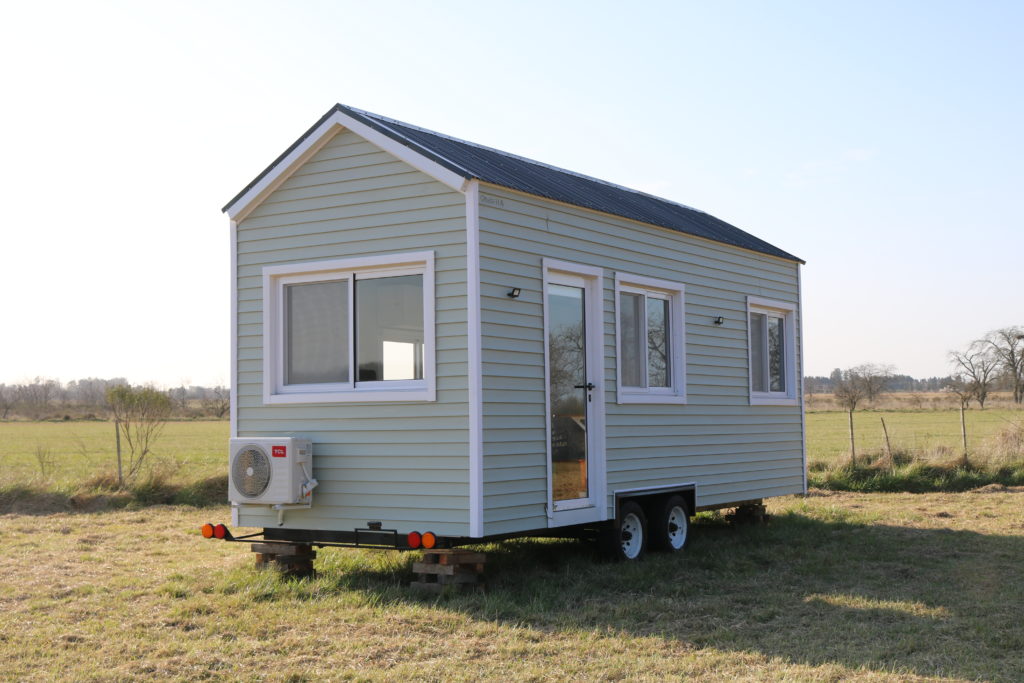
UN-Habitat is an agency of the United Nations (UN), based in Nairobi, which aims to promote socially and ecologically sustainable cities and towns. This program developed a strategy together with the Yale University and the study Gray Organschi Architecture which materialized the definitive concept of the Tiny House.
The aim of the project based in New Haven The aim was to develop chains of modular houses that were capable of providing a decent space for their inhabitants and were self-sufficient both within the city and in marginalized spaces or spaces damaged by environmental inclemency.
Leaders of the UN-led programme claim that this model home could be occupied by a family of four. It is also environmentally friendly: the interior cladding made of wood fibre keeps the interior temperature stable and the sloping roof was designed to be a ventilated space thanks to the chimney effect in which warm air from the lower level rises and creates an organic cooling duct. In parallel, Rooftop solar panels are responsible for generating energy sufficient for basic supplies.
The phenomenon in Latin America
Beyond the model scheme developed by the UN, with a small space provided with clean energy and cross-laminated fir wood as the main material for its development, the Tiny House phenomenon It developed unevenly in Latin America.
Through architecture and design, the needs of current home layouts are met, modifying spaces to adapt to new roles and priorities. Modular and customizable structures designed for temporary stays emerge here, giving prominence to spaces such as the kitchen (which takes on a new connotation and is given a more social role), and the redesign of rooms of the same size instead of a master bedroom.
Juan Baquero, founder of Tiny House Colombia, explains that these types of homes are about 40m² or less and have all the services. “A 'tiny house' can be built with any material. We build them on wheels and out of wood; others build them in second-hand containers or with polyurethane walls. The interior reduces the connecting spaces such as hallways and reception areas, and leaves the service spaces such as the kitchen, living room and bathroom of regular size,” explains the businessman.
According to Baquero, Your company's buildings save up to 11,000 liters of water per person per year thanks to the composting toilet"In addition," he explains, "they receive any type of clean energy, solar or wind, and 98% of our construction is renewable or recyclable."
“In addition to all this, there is no need to break the ground to plant the house, as it is on wheels. It is not connected to the sewerage system either, but the waste water is separated and filtered to return the water to the same land,” Baquero explains.
For its part, Augusto Lezcano, Marketing Manager at Casarella, says that in 2018 they launched 'Casarella Tiny', a tiny house that has a particularity: they are mobile houses with steel structures. In this line, he adds that they are the first factory in Argentina to build this type of houses with the steel frame system. "Currently, we have two fixed models and the possibility of making custom-made tinys," he adds.
One of the permanent models is the 'Tiny Brisa', a two-story design with a total of 22 m², suitable for four people. On the ground floor there is the living room, kitchen and bathroom, and on the upper floor there is the bedroom with a double bed. "In the living room we have a sofa that can be converted into a bed suitable for two people. The kitchen has a breakfast bar, under-counter cabinets, stove, extractor fan and pantry. The staircase has a double function: on the one hand it is the staircase that gives access to the bedroom, and it also functions as storage furniture, as it has several drawers and space for the refrigerator," describes Lezcano.
The other model is called 'Tiny Terra', a one-storey design with a total of 18 m², also suitable for four people. It has an integrated living room and kitchen, and a separate master bedroom with a private bathroom and shower. On one side is the under-counter cabinet with kitchen, and on the other side, a breakfast bar and a cabinet for the refrigerator.
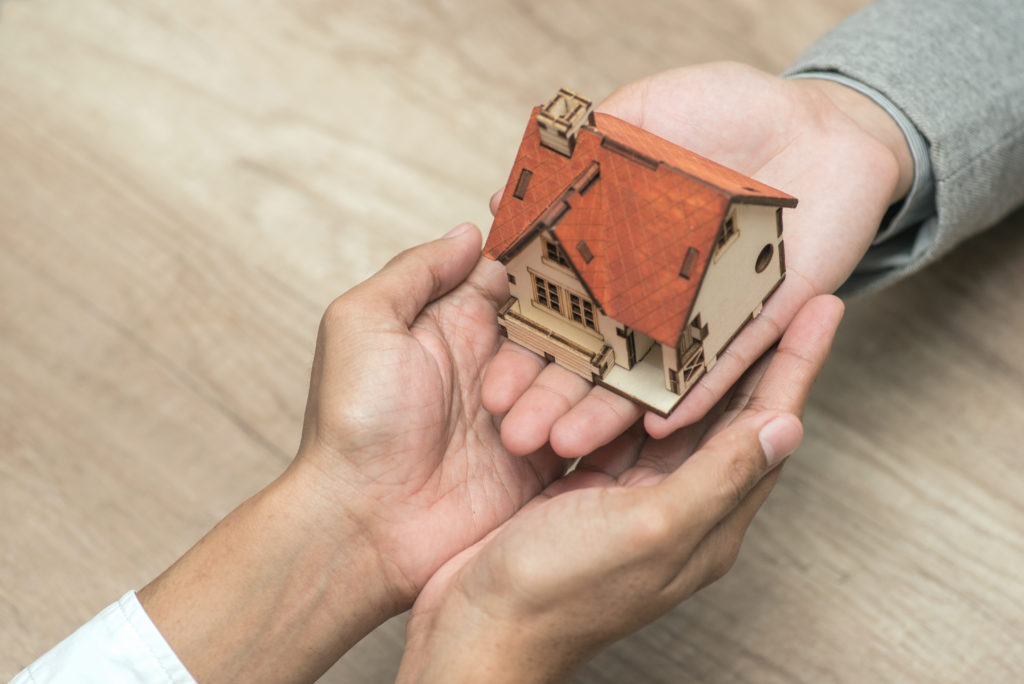
“The peculiarity of all the models is that they are made with 'framecad' technology, since we have our own steel frame panel forming machine. This means that they are not hand-made houses; they are houses designed by our architecture department. The model is engineered with specialized software and sent to production in our own plant, where they are assembled, equipped and supervised. The houses are ready to be inhabited.. The construction of a tiny house takes approximately forty-five days,” adds Lezcano.
As for the finishes, they are covered with PVC siding on the outside and with PVC tongue and groove on the inside, which means they are low maintenance, they do not need to be painted or treated with any special product. They have thermal and acoustic insulation, and are suitable for very cold areas.
“Something important to clarify is that this is not a mobile home to travel from place to place. It is a mobile home only to be moved to its destination. They can only be moved with 4×4 trucks or trucks. Once at the location, the wheels are removed and it is installed on some pillars and all the sewage, water and electricity installations are carried out, like any traditional house. They also have the option of installing solar panels," concludes the marketing manager at Casarella.
“From our perspective, a Tiny House has to do with the good use of space and resources in general“It doesn’t have to have certain dimensions or be on a trailer. In other words, it doesn’t stop being a tiny house just because it’s 60 square meters if there are actually four people living there,” says Joaquín Rodiño, owner and founder of Tiny House Uruguay.
For this reason, the Uruguayan company associates the concept with the idea of a space that is just right for needs and good health. “There are people - they emphasize - who need more space and others who need less. I don't think there is a box to define a tiny house. And, from our experience, very small tiny houses take their toll on you,” remarks Valentina Rivero, partner at Rodiño.
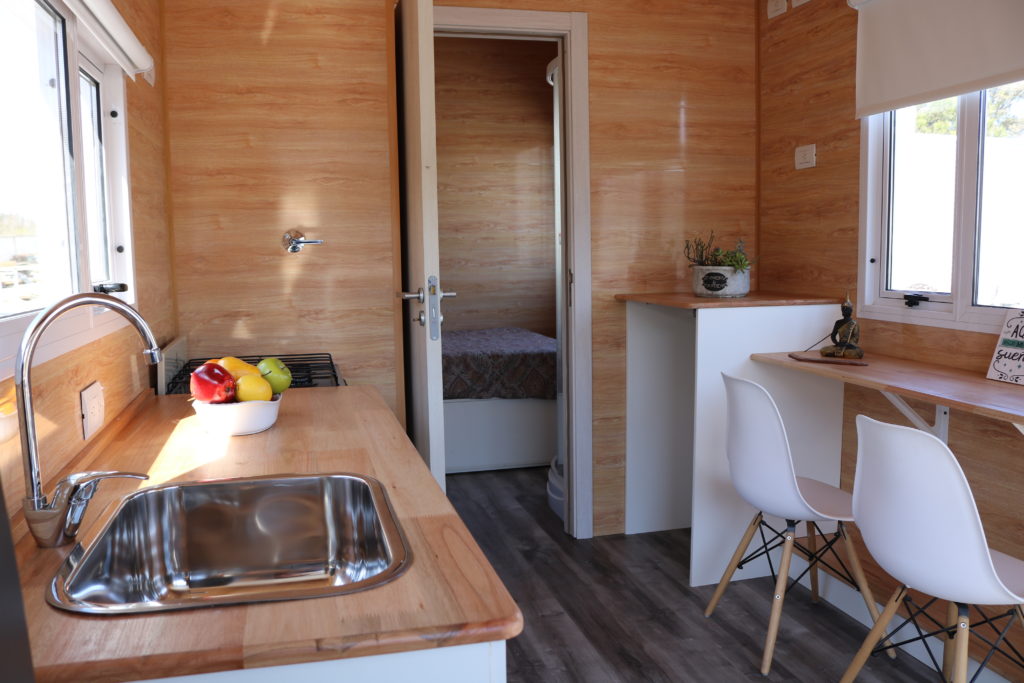
The wheels under the tiny houses have to do with a legal issue: “In many countries you are not allowed to live in less than a certain square meters. In Uruguay, for example, it is 32 mXNUMX. Therefore, by making them mobile homes, they can avoid this weight of the law.”
According to experts, these types of buildings are usually used more as summer or weekend homes than as permanent residences. In many cities around the world they are not permitted, which is why they are usually located in remote places, such as fields or near the beach.
“A phenomenon that occurs in Latin America It's just that young people have a hard time accessing “They are small but expensive. And this is because everything is custom made: the table, the chair, the bed, and everything inside. This makes the entire construction more expensive. Also, the trailers needed for these are powerful. They are not the ones you get anywhere. You have to order them. They have hydraulic brakes and triple axle. We are talking about 12 thousand dollars of expenditure just on the trailer,” explains Valentina Rivero.
For Tiny House Uruguay, one of the most important things about a tiny house is its design: “There should be harmony in all its lines, shapes, geometries and colours. Since these are small spaces, one should feel comfortable inside,” Rodiño concludes.
As can be seen, the phenomenon of 'micro houses' developed in different ways in Latin America. For the most enthusiastic, the Youtube channel Latinys It shows stories and examples of tiny houses in the region that attest to the multiplicity of cases and uses. In addition to providing ideas, it focuses on the latest trends and compares in detail how this movement developed in different countries. It also offers courses and key tips to make a tiny house accessible to any enthusiast.