


While this trend was already taking place in the Nordic countries before Covid, the pandemic put the education system in check worldwide and invited leaders to rethink the way young people learn. Face-to-face classrooms, individual or double desks, with the teacher in front, are conditions of an old way of learning.
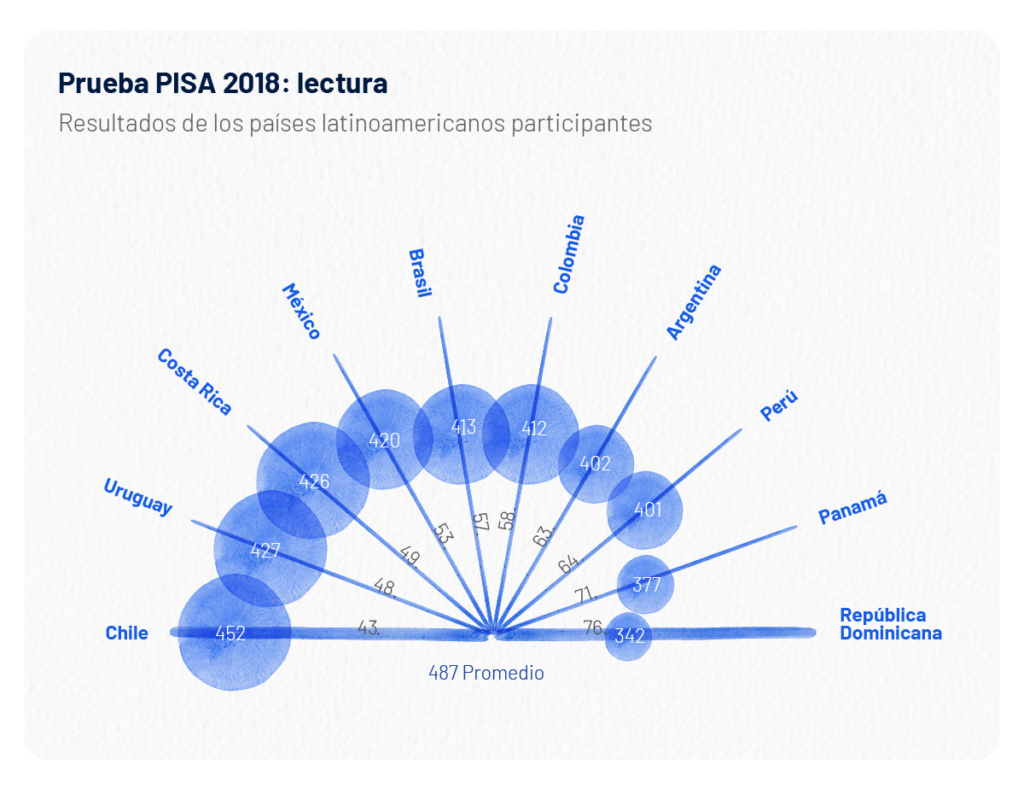
According to the Inter-American Development Bank (IDB) in its report 'Innovative schools in Latin America'In Latin America the problem of school dropout is still a persistent reality and One in two young people does not finish high schoolThat is, more than 43 million Latin Americans between 15 and 29 years old did not complete secondary school, 31% of the youth population in the region.
The current context has shown that Latin American countries are not yet prepared for the next step in educational innovation. The pandemic has made it clear that access to education is impossible. education. of young people who do not have digital resources and who in most cases did not receive support from the educational institute to continue their learning.
Therefore, in this new way of learning that is proposed The first step is to digitalize information and provide access to technology to the entire population. The IDB proposes five educational paths to take the step towards innovation in schools, guided by examples of actions that were effective and had a reach:
- Educa Virtual PopUp Schools
This is a merger of two projects arising from a public-private partnership that enables States to respond rapidly to educational needs in crisis contexts. This action is also presented as an alternative to enrich the existing school infrastructure. Since 2010, Virtual Educa develops studies for the creation of the “classroom of the future”, the objective of which is to adapt the most immediate environment of students and teachers to the 21st century.
- Telesecundaria
Secondly, it highlights the telesecundaria, a model that proposes 50-minute learning sessions, each of which includes a 15-minute television program. The broadcasts were enhanced with the use of Edusat Network as a means of communication, dissemination and support for education, which contributed to the expansion of its coverage. This program reached more than 1 million students in just one year.

- ProA Schools
In the third group, the emphasis is on public schools and how to innovate in them. In Argentina, for example, the following were developed: ProA schools, an experimental proposal at the secondary level that emphasizes the use of ICT and offers students a study plan to become a Bachelor of Computer Science with Specialized Training in Software Development, and another to graduate as a Computer Technician in Programming.
- Hybrid Schools
Hybrid schools in networks are the fourth possibility of innovative education proposed by the IDB. In Colombia, educational proposals were developed that sought to reduce the gaps in access to basic primary, middle and secondary education. Among the services provided by the institution, the following stand out: Learn Centers, which offers basic and secondary education in a completely online format.
This educational proposal mediated by virtuality is aimed at young people and adults who, due to specific conditions, have not been able to complete their studies nor have the possibility of accessing a flexible educational process that allows them to articulate study and work.
- Laboratories
The fifth group is made up of laboratories that distinguish schools where the use of technology predominates as a form of innovation. These are the laboratories of the future that show possible trends and models. They often have the advantage of having private investment, which allows them to experiment with more resources.
Skills and abilities of the future
The educational models of the future present as a common thread that They are based on students' competencies and do not refer to a generalized plan., as they seek to provide real tools for the jobs of the future. In addition, they are based on problem solving, soft skills development and lifelong learning.
With the development of technology and its use, not only in education but in all industries, so-called soft skills are beginning to gain relevance, unleashing the need to strengthen them through training and opening up an opportunity for industry players.
According to World Economic Forum, emotional intelligence, coordination with others and cognitive flexibility will be among the top 10 skills that employers will be looking for by the end of 2020.
Experts at Make Sure You Live They state that “digital technology allows teachers to create more interactive, attractive and flexible learning materials in a variety of digital and multimedia formats and make them available to students according to their tastes and needs.”
In this way, they explain that learning can be transformed into a personalized experience by allowing students to approach problems in their own way, “as well as acquire knowledge at their own pace.” This also makes it easier for more talented students to help others.
Education is one of the most powerful tools for building a more equal world where social gaps are reduced. That is why Seguros SURA helps promote the use of technology in education to serve those who have the least and need the most, so that the vanguard of digitalization is not just another mechanism for generating differences, but rather becomes a vehicle for evolving in a homogeneous manner.