

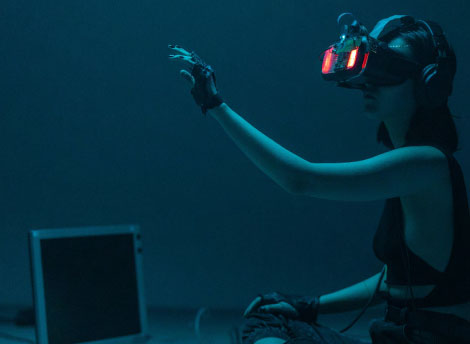
Technology is advancing at an astonishing speed, with the power to transform not only our way of living, but also the way we work, communicate, and think. With increasing urgency, individuals, businesses, and organizations are forced to adapt to this wave of change. Even more interestingly, the technological revolution knows no borders. Today, billions of people are experiencing its direct impact, thanks to information technologies.
A paradigm shift: value is now measured in data
We are experiencing a paradigm shift in which value is no longer measured in physical assets, but in data. In the business world, organizations that do not integrate artificial intelligence (AI) and data analytics will quickly fall behind. This transformation not only impacts the production of goods and services, but also the way strategic decisions are made. Today, data is more valuable than cash, more than physical property, because it allows us to understand consumer behavior, predict trends, and make informed decisions.
Artificial intelligence and hyperconnectivity: opportunities and challenges
The impact of Artificial Intelligence (AI) on our daily lives and the business world is undeniable. But, contrary to what many believe, AI is not here to replace us, but to strengthen us. Companies that successfully integrate these technologies will not only optimize processes but also enhance human capacity to create value, solve complex problems, and make faster and more accurate decisions.
On the other hand, digital interconnection has blurred the boundaries between people, devices, and machines. Today, smart cities manage essential services in real time, autonomous vehicles optimize mobility, and healthcare is personalized through connected devices. However, hyperconnectivity also generates dependency and social fragmentation, raising new questions: Is it possible to maintain social connection in such a hyperconnected world? And what about the privacy and security of our data? Consumer trust is more linked than ever to how companies handle information.
Privacy: A Valuable and Vulnerable Asset
Today, more than ever, consumers are choosing brands that give them control over their data. Privacy protection is no longer just a legal or technical issue, but an ethical one. Companies that manage to balance data collection with transparency and security will be better positioned in the future. It's crucial that organizations consider not only the immediate benefits of data, but also the trust that is built or destroyed by its handling. In this context, the key is to use data responsibly and ensure that customers feel their privacy is protected.
Transformation of the labor market: adapt or be left behind
The rapid adoption of automation and AI is changing the nature of work, underscores Suramericana's Macrotrends report. Repetitive and routine jobs are being replaced by automated processes, while demand for skills in areas such as data science, programming, and complex problem-solving is increasing. However, a major challenge remains what to do with employees displaced by automation. Organizations must invest in ongoing training for their employees so they can adapt to new roles, using AI as a tool, not a substitute.
Sustainability: a balanced future between innovation and ecological awareness
As technological innovations continue, opportunities for sustainability also open up. Technology can help us manage natural resources more efficiently, enabling innovative solutions such as renewable energy, precision agriculture, and carbon capture systems. The challenge lies in finding the right balance between human progress and the Earth's regenerative capacity to ensure a sustainable and healthy future for future generations.
The opportunity is in our hands: are we ready to seize it?
Let's ask ourselves how we can leverage technology to improve our lives, our organizations, and the world we live in. Living amidst constant streams of information, the key to making data-driven decisions and adapting to the changing technological environment with ethical judgment lies precisely in harnessing the power of the information age.
What generates uncertainty today is not an enemy, but a misunderstood messenger bringing knowledge. Artificial intelligence, algorithms, and hyperconnectivity are not threats but signals that, when heeded in time, open paths to new possibilities.
The future isn't predicted. It's built. And it's built with brave decisions made today, when many still don't know where to start. The companies that transform the world aren't those with all the answers, but those that dare to act, those that don't seek to adapt to change, but to lead it.
In this horizon where technology and humanity converge, the opportunity lies not in resisting the inevitable, but in transforming uncertainty into fertile ground for growth. Are we ready to cultivate that future together?