

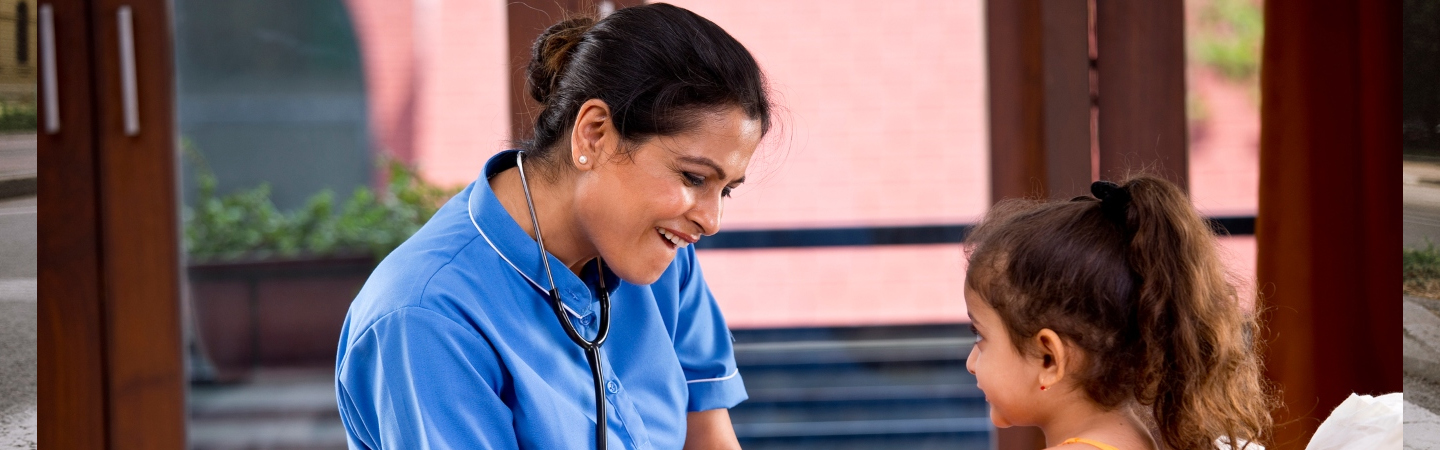
Sometimes, receiving medical care at home is more beneficial than going to a hospital. The tranquility of being in one's own space and in the company of loved ones can be an emotional boost for patients' recovery.
The doctor Juvenal Urbino, character of the novel Love in the Time of Cholera, by Colombian writer Gabriel García Márquez, went out every day at 4 in the afternoon to visit “his patients, after drinking a large jug of lemonade with ice.” He refused to receive patients in his office and “continued to attend to them in their homes, as he always did, since the city was so domestic that he could walk anywhere.”
For many years, home care was the only form of medical assistance. The first hospitals, mostly run by religious orders, provided their services exclusively to homeless or abandoned people. It is thanks to the development of diagnostic techniques and treatments that this dynamic changed. Today, clinics and hospitals are the places par excellence for caring for patients and their needs.
Dr. Francisco Sánchez del Corral, a specialist in family and community medicine, believes that in recent years there has been a renewed interest in the home as a place of patient care and that this is “facilitated by technological development and the expansion of primary care.”
Home care can be defined, according to Dr. José Manuel Esteban, as a service through which continuous medical assistance is provided for the resolution of health problems that do not require hospitalization and “is aimed at people who cannot travel to a hospital due to impediments, generally physical.”
The goal of home care is to provide patients with better care, taking advantage of the fact that the family environment plays a leading role from an emotional point of view, but without neglecting the responsibility of continuous care by the health care provider.
Beyond the emotional incentive that comes from receiving medical treatment at home, we tell you these 9 benefits of home care:
- Assessing intra-family relationships in their natural setting, helping patients and their families to cope with the disease in the best way possible, caring, informing and using medical resources effectively.
- Establish better communication with patients' families.
- Obtain additional information at home for better diagnosis and treatment.
- Involve the sick person and their family members in decision-making during treatment, depending on the diagnosis, always prioritizing patient autonomy.
- Monitor compliance with the indicated treatment and the achievement of the proposed recovery objectives.
- To discover in time possible factors that hinder the follow-up of the established plan for the patient's recovery.
- Identify the patient's primary caregiver, that is, the person who allows the individual to maintain health and well-being, helping them with their different needs.
- Educate the patient and their family to promote self-care and self-responsibility in preventive health issues.
- A very important one is that the medical staff travels to the home, avoiding the patient having to travel.
Home care, like everything related to health issues, requires specialized medical personnel and the full availability of the family and the patient. It is not designed only to provide palliative care. The challenge is to receive quality support, adds Dr. Sánchez del Corral.
Thinking about the well-being of SURA members, throughout Latin America we have the Health at Home service that can be consulted through the WhatsApp line of each country or the local website.
Virtual health care:
Looking to connect you in the fastest way with a professional, we created the Virtual Health Care Service, in the App SURA Insurance, which gives you an initial assessment of your condition and refers you to one of our five types of services.
If you haven't downloaded the app yet, do it here. If you already have it, enter now to learn about the service. Do not self-medicate or wait for the symptoms to worsen.
Bibliographic sources: