

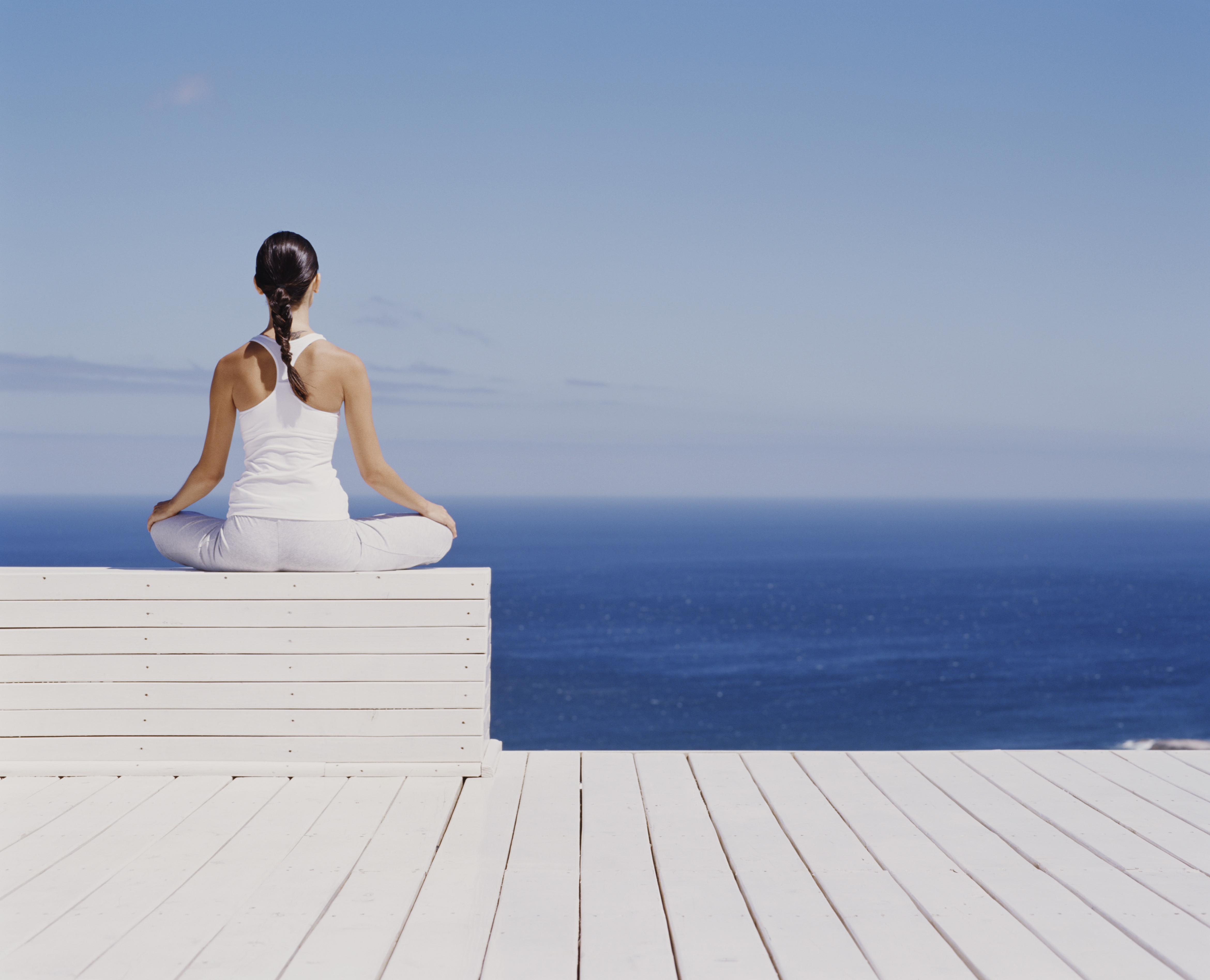
The search for balance and reconnection with the simplicity of everyday life are the premises of a lifestyle in which status is no longer given by having but by “being.” Meditation is an excellent way to achieve this.
According to experts from SURA's Make Sure to Live, in a time of change marked by great scientific advances, such as the one we are currently experiencing, society tends to return to the essence of simplicity, nature and the spiritual, in a search for a harmonious state between the mind, body, spirit and environment. It is in this search that meditation appears as a vehicle to achieve balance.
"Meditation as the art of connecting mind, heart and body, achieving that where the latter is, the first is also there, is a tool that, practiced constantly, creates a change in your mental structure that brings peace and serenity to life," summarizes Janed Rivera Restrepo, Development Leader With the People Consultants.
Meditation is growing in Latin America
This ancient practice is a gift from the East to a West burdened with consumerism and, in Latin America, it functions as an indispensable tool to initiate a significant change in philosophy and quality of life.
"We are a region plagued by social, economic, and cultural situations that undermine the mind and generate unimaginable levels of stress, anxiety, and anguish. We are among the regions of the world with the highest levels of suicide, in addition to the presence of mental disorders such as anxiety and depression," explains Rivera Restrepo.
According to the WHO, mental and neurological conditions make up almost a quarter of diseases in Latin America and the Caribbean. And, according to research carried out by the application Pure Mind, Eight out of ten people in Latin America begin to meditate due to high levels of work and family stress.
“The good news in the face of this discouraging outlook is that, in the region, we are increasingly aware of the need to generate fundamental transformations that allow us to face these realities, giving us tools to navigate and manage emotions, and achieve higher levels of well-being,” Rivera Restrepo counters.
What is meditation: its meaning and influence
“Meditation is connecting with our breathing, with our life principle”, says Laura García Radresa. The holistic therapist explains that meditation is the means to connect with all the bodies of our multidimensional being, and it is from this transcendental union that the answers to problems appear and the paths to healing are illuminated.
Meditation allows you to be in the here and now, and from this active presence, it allows us to reflect, connect and feel what is happening within us. Meditation allows coherence between feelings, thoughts, and actions. Among the benefits of its practice are:
- Reduce stress and anxiety levels.
- Increase the level of concentration: for studying, work, and even for talking about something emotionally moving.
- Increase levels of creativity, efficiency and self-confidence.
- Boost the immune system and therefore prevent diseases.
- Increase oxygen levels and improve brain function: by breathing, releasing and recognizing internal processes, the ability to generate neural reconnections increases.
- Coordinate the heart rate, avoiding arrhythmias, among other diseases.
- Organizing and taking into account: becoming aware of one's own thoughts, rationalizing them, and organizing them also allows one to clean up those that are toxic and repetitive. “Through meditation we can observe everything that happens, like a movie, and we can therefore change its ending,” reflects the holistic therapist.
“Practicing, teaching and spreading it at any age provides unparalleled benefits at an individual and collective level.“, concludes Rivera Restrepo.
Is there an age limit for meditation?
Meditation can be done in many ways (in silence, with music or with a guide, among others), and at any time. “That is the beauty of it, because it allows access to all types of people, profiles and ages,” García Radresa explains. In this sense, meditation does not distinguish ages. Added to this is the fact that it is a practice that does not require prior knowledge, preparation or experience. “It is an exercise that can be done intuitively. A conversation with our soul and our heart,” he says.
For Rivera Restrepo, meditation is increasingly common among older adults because at that age a level of wisdom is reached that transcends the ego that usually governs other stages of life, and the desire to “live each day fully” gains strength. “Many want to dedicate their lives to practice, stripped of banalities, the art of being happy”, he shares.
The mindfulness practitioner admits that another reason why the practice is so well received among the elderly and seniors is that, often due to loneliness, people seek in meditation a “revitalization that strengthens their spirit, finding in it moments of reconnection with oneself, renewing their faith in life.”
In conclusion, in a world where alienation is one of the most difficult rules of the system to notice, meditation appears as a kind of rescue that gives the individual the opportunity for a new beginning.
A beginning in which being present becomes the only motto from which the different responses and solutions to everyday problems branch out. For Seguros SURA, paying attention to this progressive - but constant - transformation in the way of life of Latin Americans is essential to understanding the social phenomena of the region.