

COVID-19: What does it mean that it has been declared a pandemic?
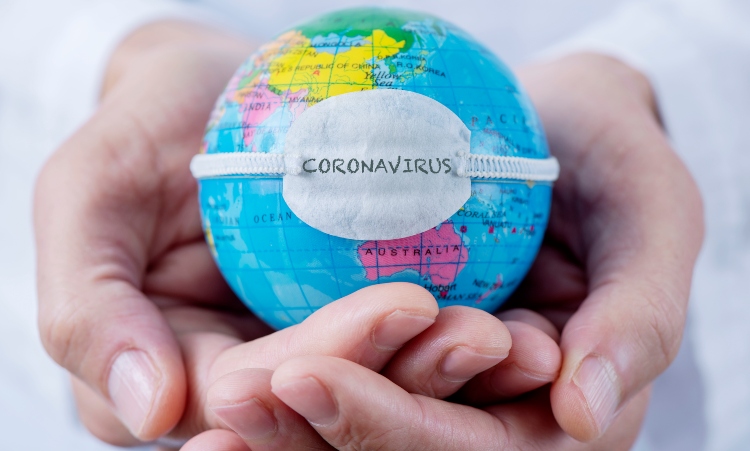
On March 11, 2020, the World Health Organization declared the new coronavirus outbreak a pandemic. What are the implications and how does this phenomenon behave? Here we tell you.
For a disease to be called a pandemic, it must have spread across at least two continents, according to the World Health Organization (WHO). The infectious agent, in turn, must produce an unusual increase in cases, as has occurred with COVID-19.
In addition to these characteristics, Dr. Carlos Andrés Agudelo Restrepo, a specialist in Internal Medicine and Master in Epidemiology, adds that the disease cannot be avoided, and “it involves the mortality of human beings and the affectation of many others, to which is added, in many cases, the collapse of health systems, as is happening now in Italy, the impact on the economy and the deterioration of the social fabric,” says the doctor.
COVID-19 was first reported on December 31, 2019 in Wuhan, China. As of March 24, 2020, more than 380 people have been infected in 190 countries, resulting in the death of 16 people. Just over 100 people have recovered.
According to the expert, there are three specific phases to deal with a pandemic and try to reduce the impact it can have on communities.
Containment phase: This seeks to mitigate the spread of the disease and applies strategies such as vaccination, identification of those affected and isolation of cases.
Mitigation phase: If the disease is not contained, we move on to this phase, which aims to reduce the impact it may have on health systems, and measures are taken to prevent a spike in infections in a short period of time.
The community is also educated to avoid contagion, in this case, through coughing and sneezing, hand hygiene and social distancing are promoted.
Suppression phase: This occurs in more extreme cases and involves quarantine in which people are isolated for an unspecified period of time while the spread is controlled.
What is there to avoid?
According to Dr. Agudelo, there are two behaviors that can make it difficult to contain the virus.
1. Spread of fake news. It is known that, in times of crisis, information that is not necessarily true begins to circulate through various media. The recommendation is not to spread it, to delete it and to report it to the competent authorities.
2. Failure to adhere to the authorities' recommendations and even carrying out acts against them, which makes it difficult to control the pandemic and encourages its spread.
In context: the most relevant pandemics of recent decades
Perhaps the largest pandemic, which is still ongoing today, is the HIV virus infection, which began in the United States in the early 1970s. There is also the Zika virus infection, which reappeared in 2014 and whose most obvious consequence is microcephaly in newborns of infected mothers. Finally, the most similar to COVID-19 is the pandemic known as influenza, in 2009, which began in Mexico with the H1N1.
Experts agree that the best way to prevent COVID-19 infection is to wash hands with soap and water, practice respiratory hygiene and social isolation.


