


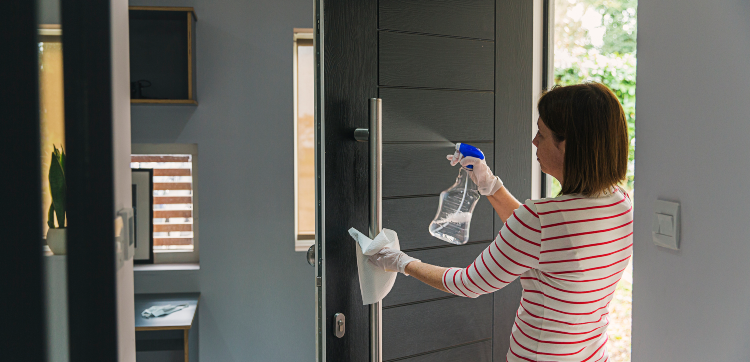
How long can the virus that causes COVID-19 survive and on what surfaces?
The new coronavirus can remain active on different surfaces for anywhere from three hours to three days, according to a study published by the New England Journal of Medicine.
The emergence and spread of COVID-19 in more than 170 countries around the world has become a challenge for the scientific community, from caring for those affected to researching the behavior of this new strain of coronavirus.
More and more details are becoming known about this infectious agent, and one of them is the approximate time it can survive depending on the surface where it is found. The New England Journal of Medicine recently published a study conducted by the National Institute of Allergy and Infectious Diseases of the United States, the Centers for Disease Control and Prevention of the same country, the University of California at Los Angeles and Princeton University.
Through tests on different surfaces, this research measured the resistance of the virus and the time in which it retained its infectious capacity. Thus, It was identified that a small percentage of this survives up to three hours in the secretions expelled during coughing and sneezing. which, as is already known, are the main vehicle for transmitting the coronavirus.
In the case of materials such as stainless steel and plastic, scientists concluded that the virus could remain active for up to three days; on a cardboard surface for one day; and on a copper surface it was preserved for four hours. It remains to be determined how long the virus survives on clothing and how temperature and humidity variables affect it.
According to the authors of the research, cited by the BBC, the high viral loads of COVID-19 and the fact that its carriers can transmit it without presenting symptoms of the disease, have facilitated its rapid spread, surpassing its predecessor, SARS-CoV-1.
With the first conclusions drawn from this study, the preventive measures recommended by health authorities become even more important to stop the spread of the new coronavirus. These are: social distancing and voluntary isolation, especially if you have respiratory symptoms; washing your hands with soap and water 8 to 10 times a day; and respiratory hygiene, which consists of covering your mouth and nose when coughing or sneezing.
In this way, self-care becomes the best alternative against a pandemic that has challenged public health on five continents.


