


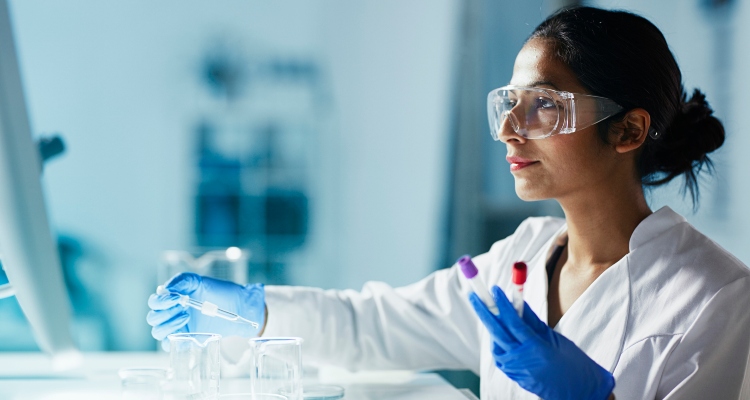
Technology and research have become medicine's main allies in times of coronavirus. Combating its spread and finding a cure are the main objectives.
Today, companies from all productive sectors are grouped around a common objective: mitigate the impact of COVID-19 worldwide. Various technological innovations are being used by hospital services in several countries: from drones that spread disinfectant to 3D printers to manufacture medical supplies.
Below, we tell you about the most notable initiatives to date in the field of health:
Therapeutic accelerators
This joint initiative by Mastercard, the Gates Foundation and Wellcome aims to launch a therapeutic accelerator to create new drugs and biological products to help treat patients diagnosed with COVID-19. €110 million will be invested in this project, distributed between the identification, evaluation, development and expansion of treatments to stop the global epidemic.
Transformation of health systems
In China, in early February, Alibaba's online consultation app AliHealth had 700.000 visits per day. In addition, the country launched the first hospital based on digital care, in conjunction with WeDoctor, with the aim of providing free consultations, achieving nearly 95 million visits.
Likewise, countries such as Spain, Colombia, the United Kingdom, the United States, among others, are implementing teleconsultations to avoid patients having to travel to health centers and guarantee the provision of priority medical services.
'Machine learning' to seek a therapy
According to experts at biotechnology company AbCellera, with enough quality data, artificial intelligence is a powerful tool for making predictions about the evolution of COVID-19. The organization is using a machine learning model to develop treatments based on antibodies from patients who have recovered from the disease.
3D printing for assisted breathing
Ventilators are an essential medical item when treating the most seriously ill patients with coronavirus. However, the global health system is facing a shortage of these supplies.
To combat the shortage, groups of professionals around the world have enabled platforms and communication channels, such as Telegram, where they share information on the design and manufacture of ventilators with 3D printers so that anyone who has one of these can print the necessary parts to replicate these automatic respirators.
Auxiliary diagnostic systems
Huawei is deploying its technology to combat the pandemic in different countries. In Ecuadorian hospitals, they created a cloud-based diagnostic system, Huawei's cloud, that can help detect more than 3,000 cases per month. The most suspicious diagnoses are made through a lung CT scan, which gives the result in one minute.
In Panama, the brand is collaborating through videoconferences and technical support so that the Ministry of Health can connect with several medical professionals located in China, with the aim of receiving knowledge and experiences regarding COVID-19.
In addition, in Argentina, Huawei has included thermal cameras with artificial intelligence, through which it detects people's temperature, an action that helps transmit medical alerts for rapid detection of the virus.
Given the delicate public health situation that is being experienced globally, technology and medicine are working more closely together than ever. Thanks to the innovation present in the prevention, diagnosis and treatment processes of COVID-19, the world projects hopeful advances towards achieving the eradication of this virus.


