


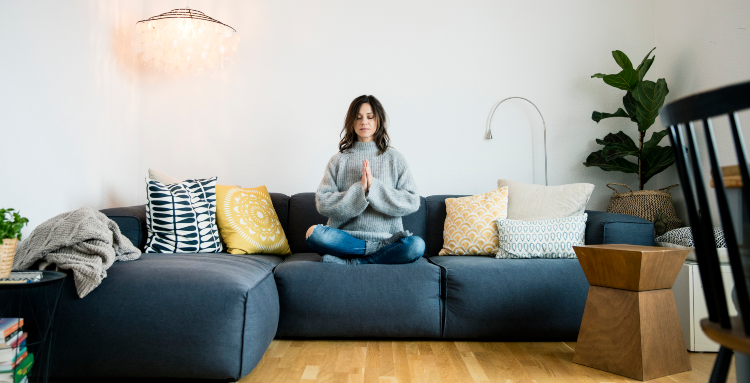
Over the last decade, meditation has become a common practice in different places. It has positioned itself as a way to cope with the speed at which the world is moving.
With the abrupt change that the current situation has brought about, some of our daily practices have been affected, one of them: sleep. This is where meditation can help us overcome the changes we have experienced when sleeping. Professionals such as Álvaro Gómez, an expert in Mindfulness and writer of several books on lifestyle, recommend daily meditation to become aware of what we have experienced during each day and prepare the mind for the night's rest.
If you have suffered from sleep loss or are not getting adequate rest during isolation, the following recommendations may be helpful:
Breathe easy. Breathing is essential for controlling your body and mind. Close your eyes, inhale, hold your breath for a few seconds and release it slowly. An exercise like this, repeated two or three times before falling asleep, will help your body to be more relaxed for rest.
Music for the mind. If you have never meditated before, we recommend choosing soft music before starting your practice. Tibetan tales, for example, help you concentrate and control your breathing. You can find thousands of free files on the internet and platforms such as YouTube. Use them at a moderate volume level.
A quiet space. You can do it in your own room, but it is recommended that it not be on the bed. You can use a mat or something that softens your contact with the floor. For greater concentration, turn off the lights. If you want to set the mood, use dim lights such as a candle or a low-intensity lamp.
Wear comfortable clothes. If your time to meditate is just before going to sleep, you can wear your pajamas. The important thing is to be comfortable at the time: nothing should impede the good circulation of blood through your body or make you uncomfortable when breathing deeply. Avoid wearing any accessories that make noise, such as chains or metal bracelets.
Positive thoughts. The minutes you dedicate to meditation allow you to organize your thoughts and slow down the pace of the day. Take advantage of this time to fill your mind with the best moments you had and project what you want to happen the next day. Thinking about positive words will also bring inner rest.
Examine your body. During meditation, you can mentally scan each part of your body. Become aware of each muscle and reach it with your thoughts. Send relaxation signals to the places that you feel need more rest. This will prepare your body for the next activity of the night: sleeping peacefully.
The mind also needs sleep. Hectic days lead the mind to work beyond working hours. While meditating, tell your mind that it is time to leave the day behind and prepare to recharge. Our body works on impulses and our mind receives every conscious and unconscious indication we have. Talking to your mind is good.
What happens if you fall asleep while meditating? It's okay. The different states of the mind find in sleep a form of rest and pleasure that is beneficial for the body.
How long should I meditate? To ensure that your meditation doesn't always end in deep sleep, we recommend meditating for 15 minutes. Once you're done, don't do any additional activities and go straight to bed so that falling asleep will be easier thanks to the calmness generated by the meditation.
Remember that meditation is something you can do as a couple or individually. The secret to good meditation is to be in the present moment, that is, to think only about that moment and nothing else.
In a short time you will see that 15 minutes of daily meditation will begin to have an effect on the ease with which you fall asleep, with a truly restful sleep and with fewer episodes of insomnia.


