

El E-commerce is growing in the region by leaps and bounds and demands the development of tools that optimize the delivery of an online purchase. As evidenced by the recent report of Competitiveness Trends From SURA, the Covid-19 pandemic and the confinement measures established to prevent its expansion caused many brands to rethink their distribution model, with a view to ensuring that their product or service reaches the hands of the consumer much more quickly. final consumer.
Thus, There was a proliferation of direct sales platforms that propose a closer relationship with users. In this context, technology becomes a competitive ally for companies.
The growing number of products and services available on the market means that the difference in the relationship that brands establish with their customers is achieved through the development of personalized experiences. Part of this experience is the moment of Product delivery, an instance also known as last Mille, where some aspects such as speed, trust and sustainability are highlighted.
Smoothing out friction in digital shopping
Hernán Giraldo, Director of Mobility Business at Seguros SURA, stressed that one cannot talk about new trends without taking into account business mobility, which is “the search by the company to be more efficient, have greater quality or greater opportunity in the management of the supply chain or delivery logistics.” In this universe, the various modes of mobility are taken into account: a truck, a shipping company, an airplane, a motorcycle, a bicycle, an electric scooter or whatever means are used.
Once the problems of shipments involving robust movements, such as international or intercity shipments, have been overcome, the last mile appears, which is characterized by the use of ultralight, sustainable, trendy vehicles, and which are those that make one person carry the final product to another person over a very short distance and within a city.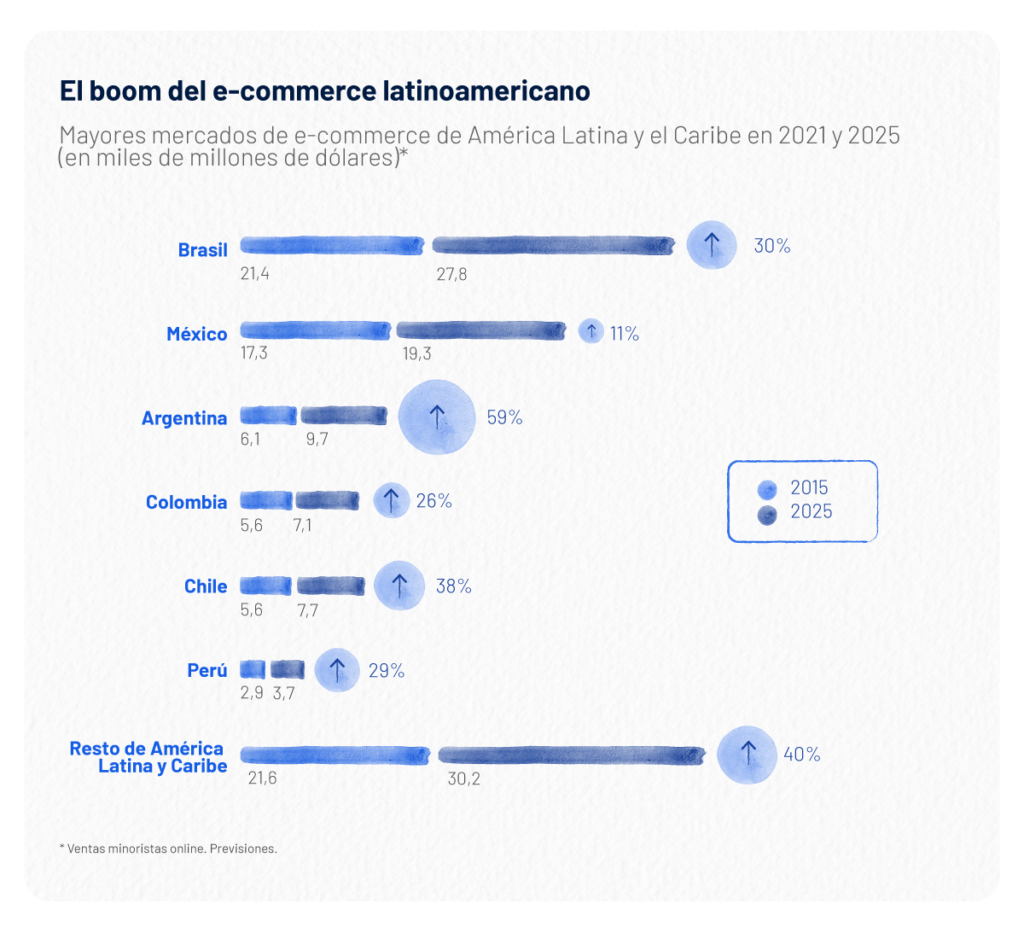 “The SME that does not consider the last mile as a fundamental factor in its business strategy is in the wrong paradigm because the consumer does not want there to be friction with the product they bought. That is the background,” Giraldo stressed.
Taking this into account, the tracking It is essential to create confidence in the purchase, since a fundamental point that digital consumers value is information: “Knowing the status of your purchase at all times, knowing in time and space what condition it is in, since people who consume in this way need to be informed and informed.”
Another point to take into account is the payment method, Giraldo added, because all the channels that companies are enabling must respond to the multiple needs of users: paying in the simplest way possible, entirely digitally and even having the option of paying on delivery for those who are just starting out in this type of purchase.
One of the latest star pieces that are gaining ground in the last mile are the so-called smart lockers or smart locker, whose main objective is to reduce the number of trips that are carried out to make home deliveries.
These are located at strategic points that operate with extended hours, such as shopping centers or supermarkets, and have the added value of reducing the impact on the environment produced by means of transportation. This is an alternative that focuses on customer comfort, without contact between people, and promotes sustainable trade.
Success stories
One of the platforms that revolutionized the last mile business is Treggo, which “offers shipping rates up to 50% cheaper than traditional logistics solutions, with an average delivery time of 5,2 hours - time from when the prepared order is collected and delivered - and real-time visibility of the entire delivery process, both for the seller and the buyer,” explained one of its founders, Matías Lonardi.
The company operates in Argentina, Uruguay, Mexico and Colombia, and its business model consists of “earning a commission between the value of the shipment that we charge our clients (online stores/e-commerce) for making the delivery with Treggo and what we pay our delivery drivers/allied logistics providers.”

Another big technological bet is Pick It, the Argentine company that landed in Colombia and, after analyzing failed delivery attempts such as absences from homes, thefts or returns, offers customers the opportunity to choose a convenient point to pick up the product that was purchased online.
The network of stores from which to pick up online purchases is made up of all types of businesses, from from paint shops and newsstands to cafes, bookstores, gyms and clothing stores. Pickit offers the possibility of joining the system and earning money for each package delivered. In the same way, the platform has enabled nearby return points to guarantee the same simplicity of the purchase.
Another of its features is that deliveries are made in less than 24 hours and it offers Drop off, so that small sellers can dispatch their sales at one point. Their main clients are Mercadolibre, Linio, Nespresso, Natura, Avon, Crocs, Logitech, Havaianas, Asics, Oriflame and Broxel.
Delivering products to consumers is an industry-wide challenge, so companies in the sector are teaming up to develop an optimal, cost-effective solution. SURA Insurance collaborates to give visibility to the technologies and new trends that are becoming increasingly important in the region.