


In a scenario in which cryptocurrencies are increasingly relevant, Latin American states are looking for ways to configure regulations around this new type of digital assets.
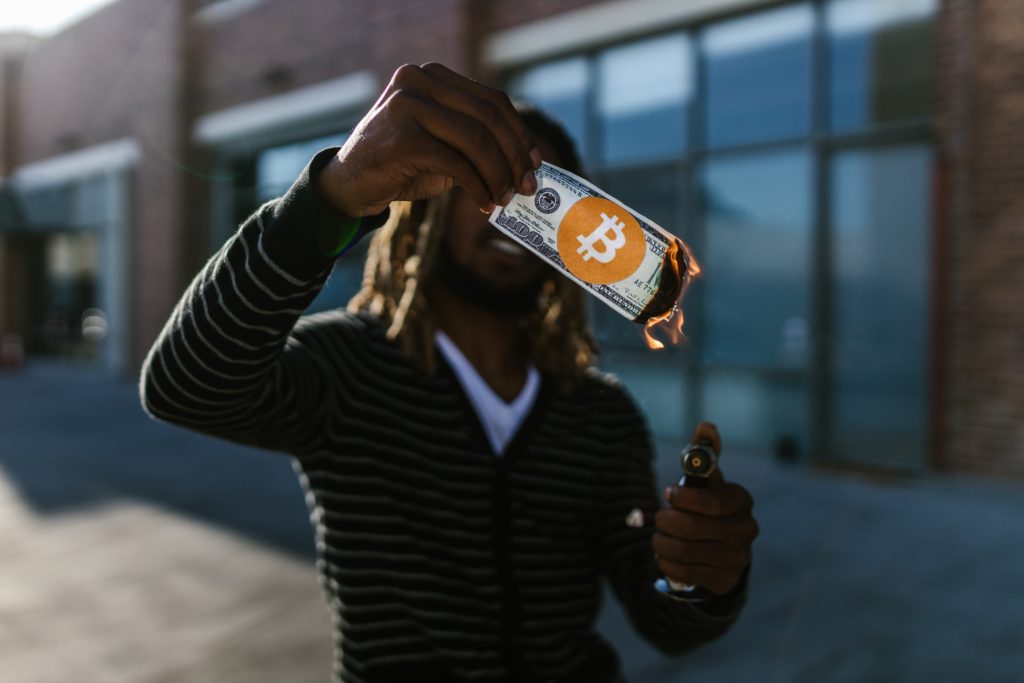
The fever for the cryptocurrencies, It has shown that this new and leading economic player is not only of interest to those who invest, but also to states, which seek to regulate it. Gradually, governments are putting aside their reluctance to these currencies and are thinking of strategies to give them a coherent and viable regulatory framework according to the reality of each jurisdiction.
In 2013, Bitcoin had an impressive rise and reached a valuation of $1000, a moment that marked a turning point in the crypto market and began to raise alarm bells about the growing importance of cryptocurrencies and the possibilities they generated.
“To date, few countries have adopted cryptocurrency regulation, but in several there are already draft laws under consideration, tests and study commissions,” said Hernán Piñeiro, CEO of Worldsys, a fintech company that develops solutions for Anti-Money Laundering Regulatory Compliance.
Cryptocurrencies: regulation by country
To Andrés Puerta, Director of Trends and Risk Management at Suramericana, there is no doubt that cryptocurrencies have gained momentum since their launch in 2009. “However, for much of this time, operations have operated under scenarios that lack regulation or fully defined control frameworks,” he says.
The expert explains that, given the positioning and wide acceptance of these assets, governments were forced to have a deeper understanding of cryptocurrencies, and it is from this reality that the need for regulation arises.
“Latin American countries are in a initial understanding phase of the phenomenon "that allows for the creation of clear regulations. Working groups were created, made up of expert committees together with the central bank, to define the respective frameworks for action," Puerta reveals.
Brazil
In the Latin American giant, there were four bills for the regulation of cryptocurrencies that had in common the obligation to comply with the Money Laundering Law and apply the Consumer Protection Code. The novelty is that this year, Irajá Abreu, the senator of the Social Democratic Party, presented a project that unifies them all, whose purpose is to make operations transparent and avoid tax evasion and money laundering. In addition, if the source is clean and renewable, a zero tax rate would be imposed on energy expenditure.
Mexico
Mexico is in a grey area in terms of the regulatory framework, as there is no law that directly regulates cryptocurrencies. In 2018, the Fintech Law was passed in the country to regulate financial technology institutions, which requires the Bank of Mexico to issue the corresponding regulation regarding cryptocurrencies and the financial system. This law assumes that financial institutions cannot transfer operations or risks to the end user, although it does not restrict cryptocurrency service providers.
Peru
The Peruvian Congress is debating the draft law Framework for the Commercialization of Cryptoassets, presented by the Podemos Peru party. It proposes the creation of a public registry of crypto service providers and the obligation to report “suspicious” operations to the Financial Intelligence Unit.
Ecuador
In this country, the manager of the Central Bank, Guillermo Avellán, mentioned that the entity will regulate cryptocurrency activity during the first quarter of 2022, in order to delimit the field of action and avoid crimes such as money laundering and fraud. The next step would be to present a regulation for the Monetary Board to review, and for said regulations to be approved by the second or third quarter of the year.
In both Peru and Ecuador, it was explicitly clarified that these regulatory proposals do not imply that Bitcoin will become legal tender, although they do admit that the state cannot be excluded from its activity.
Colombia
Here, the Financial Superintendence approved a regulatory sandbox: a controlled learning space where pilots of possible business models not yet regulated are carried out. The aim of this initiative is to experiment and study a regulation for the new capital format, thoroughly investigating the knowledge on this matter.
On the other hand, since April it was declared that bitcoin transactions exceeding 150 dollars must be reported to the country's Financial Information and Analysis Unit. Failure to comply with this order would result in sanctions of between 100 and 400 minimum wages.

Chile
There is a Bitcoin Bill to address the issue of cryptocurrencies, which aims to create an environment that protects all the actors involved: from owners and financial intermediaries to investors. This project contemplates that the country's Central Bank would be the institution responsible for regulation.
A plus of this law is that it requires mandatory training for specialists who sell cryptocurrencies.
Panama
Panama has two bills:
- Crypto Law: would regulate both bitcoin and ether, establishing these cryptoassets as an alternative global payment method for any civil or commercial operation in the country.
- Bill 696: recommends regulation of bitcoin, ether, and tether, as well as other types of tokens such as NFTs and 7UT.
The Trade and Economic Affairs Committee is debating whether it is better to combine the two laws, or choose one to take to the National Assembly.
Venezuela
In 2018, they passed the Constituent Decree on Cryptoassets for their regulation, starting early on the path of the regulatory framework for the new asset. In addition, Venezuela was the first state to create a cryptocurrency: the Petro token.
On the other hand, last February the Executive approved a reform to the Law on Taxes on Large Financial Transactions, which covers cryptocurrencies, and establishes the collection of a tax of 2% to 20% on operations with crypto assets.
Argentina
This country has a bill presented by deputies of the ruling Frente de Todos, and a preliminary draft presented by a deputy of the opposition Juntos por el Cambio, Ignacio Torres, which has the endorsement of several exchanges in the country.
The cases of El Salvador and Bolivia
The case of El Salvador It stands out in the region since, in addition to openly allowing operations with cryptocurrencies, it became the first country in the world to define Bitcoin as legal tenderIn El Salvador there is total freedom to make purchases of goods and services in cryptocurrencies without any type of restriction.
The government even provided an electronic wallet called “Chivo”, which allows - at the discretion of each individual - to convert the bitcoins received into dollars in order to avoid market risk. For the SURA specialist, this measure denotes the “special care that governments are beginning to put into the subject”.
At the other extreme is Bolivia, whose Central Bank has banned the use and marketing of cryptocurrencies. “Using this means of payment for the purchase and sale of products and services is illegal,” Worldsys says.
SURA experts share with the Blog Make sure to live some Keys to understanding the factors that come into play in the regulation of cryptocurrencies:
- Creating a transparent and controlled environment for carrying out operations.
- Prevent money laundering.
- Understand each country's position on cryptocurrencies as a payment alternative before taking action.
- Consolidate an entity that oversees operations.
- Generate incentives to reduce energy use.
- Define a tax framework that taxes the execution of transactions.
- National monitoring: to the definitions of each country.
- Regional monitoring: In addition to local regulations, a regional position must be consolidated to allow for harmony between the different actors.
Finally, Puerta says that, although cryptocurrencies can contribute to the development of the financial system in the coming years, to make this transition a set of risks must be overcome, such as:
- High volatility
- Lack of support from a central bank or a guarantee fund
- The high energy expenditure that cryptocurrencies require
“Regulation emerges as a necessary clarifying element that defines the rules of the game and guarantees reliability and transparency when carrying out an operation, for all the actors that belong to this ecosystem,” he concludes.
Keeping abreast of new trends and forms of political, social, and economic interaction in the region is one of SURA's objectives. Therefore, through studies and reports, it seeks to illustrate and facilitate understanding of the different phenomena that occur and are intertwined today. Understanding is essential to exercise.