

The so-called 'non-fungible tokens' have already been the talk of the town in 2021 and are preparing new proposals this year. What are they about and how will they evolve?
And one day, what transformed work, education and finances reached the world of art. Digitalization finally reached artists, who had already been exploring this world, which seemed so separate from computers. And the reason is a technology that allows reproducing one of the noblest values of artistic creations: originality, the unique and unrepeatable quality of a piece.
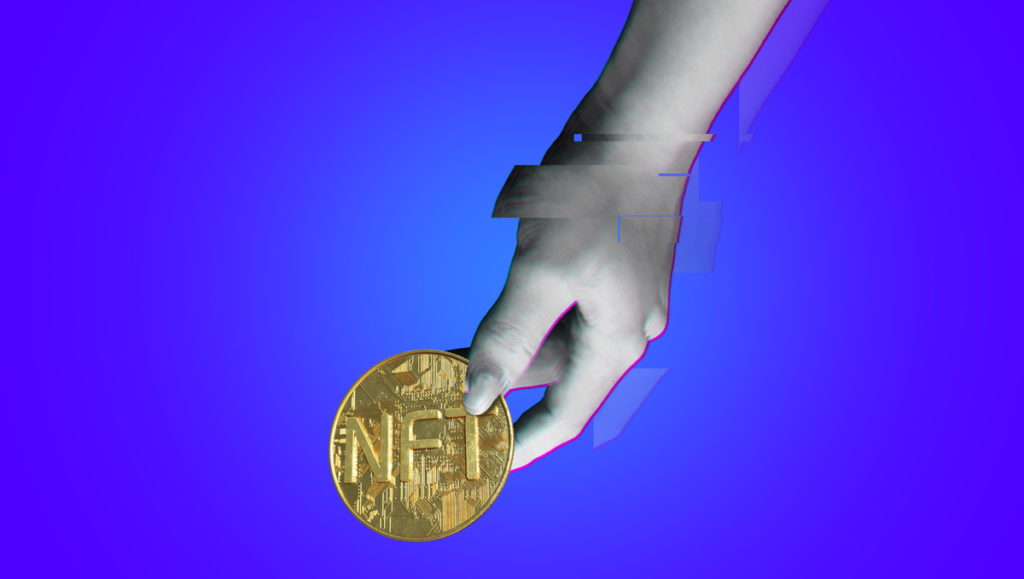
These are the so-called NFT (for its acronym in English 'non-fungible token'), which have been exploiting their potential since 2021, in a market that was unthinkable years ago. This is a digital certificate of authenticity that is associated with a single digital file and that uses the same technology as cryptocurrencies, the blockchain, or, in Spanish, blockchain.
This means that the image, video, audio or any compressed artistic file cannot be duplicated, is not consumed with its use and cannot be replaced by something else. These also have an identifier that records numerous data such as the name of the author, its initial value and its sales history. It is authenticity transformed into bits.
Its explosion involved positions for and against this new way of making art. Juan Pablo Scheinsohn, Aura spokesperson, an NFT art platform, is “a tool for humanity” and details that it is a digital asset that “can represent a work of art, a collectible digital object or a piece of land in the metaverse.”
The opposite is the opinion of Federico Bongiorno, a digital expert, who confesses to Make sure you live that NFT technology “is 10% art and 90% utility behind the technology” and, for this reason, he adds that NFT art projects that have no utility “will be worth zero in two or three years.”
The big jump
Despite being around for years, there was one specific event that marked a before and after in the history of NFTs. It was the sale of the JPG file 'Everydays – The First 5,000 Days', created by artist Beeple (Mike Winkelmann), for USD 5.000 million by the auction house Christie's in New York.
Its high value surprised thousands of collectors, companies, celebrities and organizations that joined the trend to promote their projects and generate profits. So much so that the global NFT market in 2021 (including works of art and collectibles) was USD 40,900 billion, according to figures compiled by Bloomberg.
Why do they have a high value in the market? In conversation with Make Sure to Live, Scheinsohn He says that “there is a generation that grew up in the digital world and appreciates digital goods as much as physical ones” and adds: “These digital goods can be scarce and highly valued for their rarity.”
On the other hand, beyond their value, the Aura spokesperson explains that NFTs revolutionized the art market because “digital artists found a way to market their creations safely and immediately through the internet.”
In this way, each artist (and non-artist) took advantage of the momentum to create and sell their own NFT. Crypto art pieces expanded to such an extent that no one wanted to be left out and there are plenty of examples: a fan bought a digital Cristiano Ronaldo trading card for 240,000 euros; Twitter co-founder Jack Dorsey sold his first tweet for USD 2.9 million and even a columnist for the renowned newspaper The New York Times sold an article for USD 560,000. Added to these is the case of Melania Trump, who put up for sale digital reproductions of images of her eyes called 'The Vision of Melania'.
The evolution of NFTs
For experts, the trend will continue and expand during 2022. More and more people and companies are approaching the blockchain world and trusting in its possibilities. Numbers and success stories are beginning to appear. Among them is that of OpenSea, the market NFT largest in the world, which surpassed USD 4,000 billion in trading volume for the first time in January.
On the evolution of NFTs, Scheinsohn reveals that “everything will be tokenized and transformed into NFTs” and shares an example: “In a few years, when you issue an invoice to a client, you can ask for the invoice to be designed by an artist. Now that invoice has a collector's value and if in a few years the artist becomes famous, the invoice that was delivered as an NFT can be sold on a secondary market and the person who originated that invoice can receive royalties from those sales.”
This case -he says- makes NFTs become a “tool to create value” and shares that the possibilities are “infinite and in this era one owns everything that is produced in the online world.”
Along these lines, he clarifies that its growth does not negatively impact the traditional art market: “It is one more proposal that is added and that artists and merchants can adopt or not. NFTs do not mean the end of the art market or physical collectibles,” he shares.
Latino cases
This expansion of crypto art is also spreading in Latin America. Numerous cases have made a difference with their NFTs. Aura highlights some names such as Lucas Aguirre, Encodesgem, Milton Sanz, among others.
In the case of Aguirre, he is a visual artist who, for years, has been working on works that cross painting, drawing and experiences generated in 3D and virtual reality. Among his notable works is the exhibition “A constructive Instability” at the Canadian gallery Art Mûr. In it he exhibited various pieces, a virtual reality installation and NFTs, a tool with which he began to associate himself in 2019.
There is also the case of Camila Fierro, the first NFT artist from Colombia. Under the name “Soy Fira”, the artist expanded her works to the world thanks to blockchain technology and the OpenSea platform. All of her works on display, using single-stroke drawing techniques and the use of intense colors, were sold in just 24 hours.
There is also the presence of Argentine José Delbo, who, since 2020, began selling his works through MakersPlace and Nifty Gateway. His specialty is comics and he has worked with the publishing giants Marvel Comics and DC Comics. Among the notable projects is his collaboration in the design of a double portrait of Batman together with Trevor Jones. In 2020, the work called “Genesis” was sold for USD 111,377, and was considered - at that time - the most expensive NFT in history.
Just like them, there are thousands of artists who join the wave of crypto art with unique and original works that, sooner or later, will be appreciated by the eyes of the world.