

To aspire to global and equitable food security, it is necessary to achieve agricultural development that is resilient to variability and change. climate change, which enhances biodiversity and is profitable, competitive and sustainable. The main challenges range from adding value in situ to products obtained directly from nature, to achieving a carbon-neutral sector.
Since the end of the 19th century, Latin American countries have based their economic growth in their agricultural vocation and potential. However, although food security and nutrition have improved in the world in general, progress has been slow and uneven and the challenges remain great. From the economic perspective, the share of emerging and developing economies in world GDP is expected to increase, increase from 38% in 2018 to 45% in 2027.
These economies together will be responsible for more than four-fifths of the projected increase in global demand for meat, cereals and oilseeds over the next decade (USDA 2018). In this scenario, projections indicate a need for at least 100 million additional hectares – almost the surface area of Colombia – for agricultural use in 2050, according to FAO and OECD.
Currently, according to World Bank data, agriculture in the region accounts for more than 5% of GDP in approximately 20 countries. In countries that are net exporters of agricultural products, the sector takes on additional importance due to its role as a source of foreign exchange.
The challenges of the agricultural industry
Despite the progress, the global crisis is forcing the sector to rethink. For the first Minister of the Environment of Colombia, Manuel Rodríguez Becerra, we are facing a planetary transition that goes beyond climate change and its various impacts, or the disappearance of vast forests from the face of the Earth. It is a transformation that manifests itself dramatically in other environmental dimensions such as the mass extinction of species of flora and fauna, and the deterioration and destruction of the marine environment, freshwater sources and soils.
With this panorama, two challenges arise: on the one hand, to have an environmentally sustainable production, reducing the impact that the agricultural sector generates in the different planetary boundaries; and, on the other hand, guaranteeing food safety, providing food to a population that is growing every day. Addressing the challenges in the best way possible, the sector can be a great ally in achieving a more sustainable society.
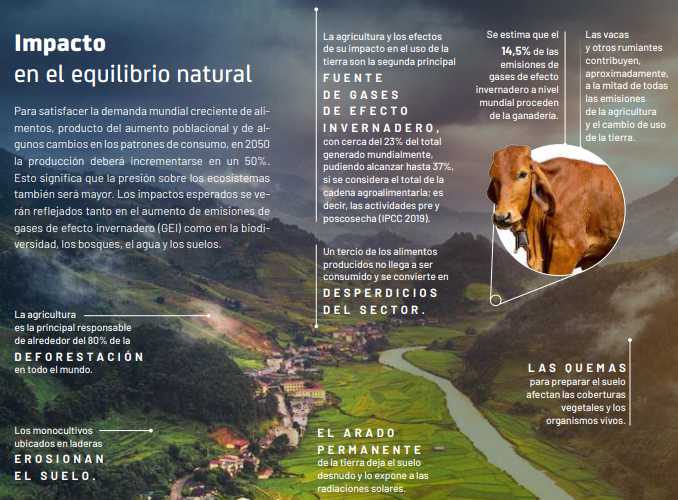
The transformation required involves ensuring access to healthy and nutritious food for all by modifying food systems; shifting to healthy and sustainable consumption patterns; promoting production that makes regenerative, non-depleting and non-destructive use of natural resources; promoting equitable livelihoods; and fostering resilience to climate vulnerabilities, shocks and stresses.
For the doctor Elizabeth Hodson, member of the UN group of scientists, science and technology can transform food systems. The challenge of sustainable production lies in integrating sectors so as to stop acting in separate compartments.
This integration will be vital to achieve specific adaptation and mitigation actions, among which the expert highlights the need to add value to products in situ, the diversification of agro-food varieties, the expansion of the protein supply spectrum and technological innovation, contextualized to regional needs.
Gloria Estrada, Geosciences Manager at Sura Insurance, argues that the agricultural sector in Latin America has shown significant growth dynamics in recent years. “Currently, there is a significant increase in the development of agtech (technological innovations that seek solutions to the problems and challenges facing the agriculture and food industry) and agrotech”, the specialist adds, mainly in Brazil and Argentina.
These two countries - Estrada adds - have at least 70% of the region's startups as a result of their own ecosystem for technological development, the knowledge of their human talent and their natural capital, among other aspects that make them widely leading the emergence of initiatives that seek to incorporate digital technologies into the sector's activities. "This shows that the intensification of technology in the region's agriculture is evolving its production models, generating multiple opportunities for its actors," he adds.

Taking into account the Agtech innovation map prepared by the IDB for Latin America and the Caribbean, there are currently more than 500 ventures that incorporate Big Data and precision agriculture, technologies in food processing, logistics and distribution, mechanization and automation of tasks, management software and information and education services for producers, among other aspects that boost agricultural production.
“Also noteworthy are the advances made by the Colombian agricultural sector in the diversification of its crops and the drive for the development of good sustainable practices, which, together with the implementation of technology, have allowed the stimulation of the agroindustry,” the manager adds. In addition, the goal set by the national government to double the share of agriculture in the GDP to 13.4% by 2030 will promote the incorporation of technology and the closing of production gaps in all segments of the agricultural sector will be essential.
In any case, one of the pending challenges of the region has to do with developing companies in the agricultural sector in a differentiated manner, given that the technological lag is accentuated among medium and small agro-food producers. For this reason, strengthening and increasing the competitiveness of companies in the agricultural sector is a challenge. Agricultural SMEs It stands out as a key element for food security management and for achieving the objectives Sustainable Development Goals (SDG).
The challenges of greater efficiency in the use of agricultural production factors in the region become great opportunities when analyzing the geographic and natural conditions of Latin America and its preponderant role in guaranteeing equitable and sustainable global food security. These natural attributes are invaluable motivators to take on these challenges and build the path towards environmentally sustainable agricultural production.
Finally, having a resilient, productive and competitive sector that develops regenerative, efficient and innovative agricultural activities will allow them to be inserted into global value chains, further improving the growth dynamics, their social return and their environmental benefits.
Towards sustainable production
The growing demand for food and other agricultural products raises the question of how the sector will be able to expand production and, above all, whether it can do so in a sustainable manner. The time has come to incorporate climate threats into land use and territorial development planning, bearing in mind that strengthening social and ecosystem capital reduces exposure and vulnerability, key components of risk.
Various trends are being observed. The strongest are those known as Smart Agro and precision agriculture. Large-scale technological and digital development has a lot to do with agricultural development. This can be seen in numerous innovative products and cultivation techniques.
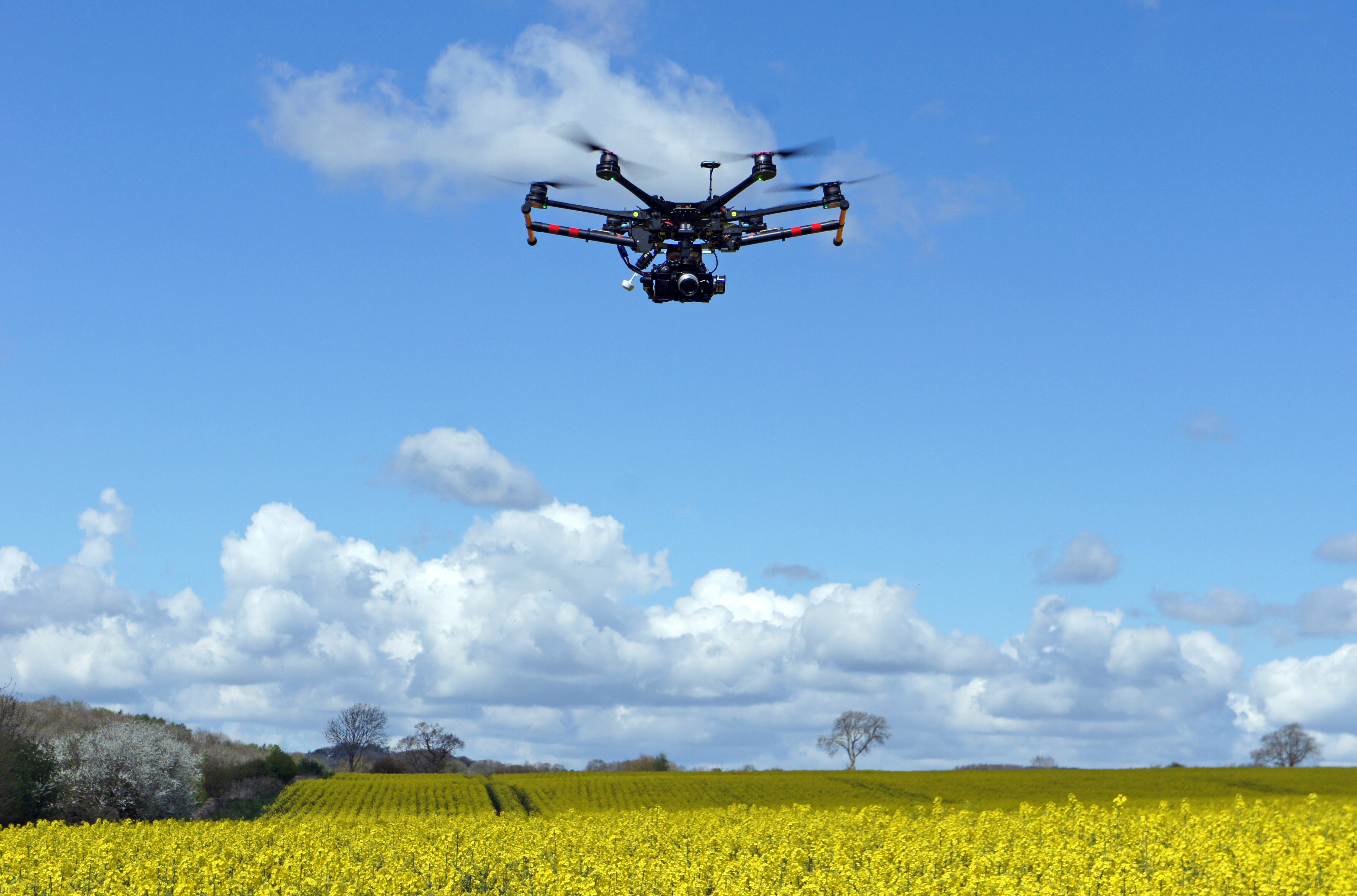
Drones are already being used to identify the best places to sow. To all this we must add the technological advancement that has occurred in agricultural machinery, where autonomous vehicles and the presence of agricultural robots or agribots stand out in particular. More and more GPS-guided vehicles are taking part in the field, in addition to aerial and ground sensors. All of this is what is already known in the sector as Smart Agro.
This concept allows us to see smart farms that accommodate different types of machines and advanced cultivation systems. An infrastructure that adapts perfectly to any situation and that facilitates, among other things, a greater optimization of the water used in irrigation and the use of new fertilizers and phytosanitary products that are friendly to the environment. The agricultural revolution, in short, is based on the idea of producing a greater quantity of food with fewer resources.
Another trend that has been observed has to do with regulatory, state and global actions that leverage sustainable production. It is not possible to overcome poverty or combat hunger, malnutrition and climate change if societies and political actors in Latin America and the Caribbean do not recognize rural areas as a driving force of economic, social and environmental development, at least with the same importance that is assigned to them in developed countries.
At a global level, some actions that have been implemented to achieve more sustainable production stand out. For exampleThe Netherlands has become the world's second largest food exporter. This has been achieved through a particularly intensive industrial agricultural sector using greenhouses. These are powered by substantial contributions of renewable energy, including geothermal systems and the widespread use of hydroponic systems and other intensive technologies.
Many crops are grown with very low water and energy intensity. For example, a Dutch greenhouse uses about 1,1 gallons of water to produce one pound of tomatoes (the global average to produce the same amount is more than 25 gallons of water). Also, since almost all farms are within controlled greenhouse environments, no pesticides are used.
Another example is the agroforestry, or the incorporation of trees on farms and pastures, to help regenerate degraded lands and increase yields. Test sites in Zambia that integrated Faidherbia albida trees produced between 88% and 190% more maize than sites without trees.
If we compare the development of the agricultural sector in Latin America with its level in developed countries, it is clear that there are still many gaps in this region, because the growth of the agricultural sector in the region is generally explained by the growth of the individual factors of capital, labor force and land, and not by greater total productivity associated with greater efficiency in the use of the combination of these factors.
The challenge for Latin America is to achieve an increase in factor productivity performance through the incorporation of new technologies, which require greater technical development of the workforce, optimization of the land and resources needed for production and the consequent more efficient use of capital.
Making the impacts and connections described above visible seeks to raise awareness and encourage cultural changes in people's daily lives. SURA's information, knowledge, conversations and different communication mechanisms and strategies aim to influence the transformation of habits at a business level and individual in the societies that make up Latin America.