



The future of mobility in cities is already underway and, although perhaps not with the help of the flying cars that the social imagination once projected, it has begun to take shape. global trends that define the cities of the future.
In Latin America, according to figures from the Interamerican Development Bank, eight out of ten people live in cities. This gives rise to the need to initiate processes to improve the quality of urban life with a focus on both environmental ecology and climate change, as well as urban sustainability.
The Power Plants They then appear as one of the applicable actions to increase the technological efficiency of city transport systems. Little by little, all Latin American countries are beginning to increase the patenting and acquisition of electric cars.
En ArgentinaFor example, according to figures from the Online Information System of the Argentine Automotive Market (Siomaa), the number of electric cars registered during the first half of 2022 grew by 28% compared to the same period in 2021. In ChileFor its part, the National Automotive Association of Chile AG (ANAC) established a 189% increase in sales of electric or hybrid cars.
En BrazilAccording to the National Association of Motor Vehicle Manufacturers (ANFAVEA), 20,462 electrified units were registered in the period from January to June. Colombia registered 13,767 new registrations of electrified vehicles and increased its share from 14.1% to 20.5% in the region, while Mexico reached 22,192 units according to the National Institute of Statistics and Geography (INEGI).
The figures show a growing trend despite the fact that High selling costs are a of the main barriers to entry. “What we see through the Sura Observatory "Many non-traditional brands in the automotive sector are beginning to venture into this technological world in order to become important competitors in the future in the new sustainable mobility," he says. Hernán Alejandro Giraldo, Director of Mobility at SURA Insurance.
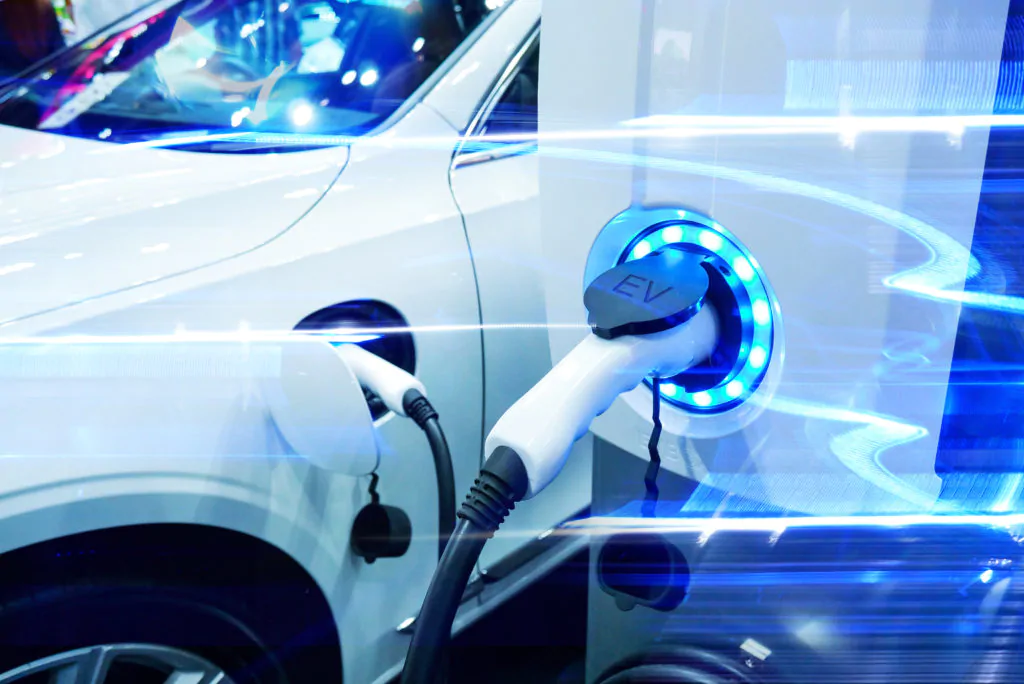
There are many differences between an electric or hybrid car and a traditional combustion car. An electric car does not run on internal combustion engines burning gasoline or diesel fuel, but is powered by electrical energy stored in its rechargeable batteries. A hybrid car, on the other hand, is one that has a combustion engine and an electric motor that work together to propel each other.
Benefits of using electric cars
Among the advantages of using electric cars to drive around cities, there is, on the one hand, the promotion of the use of clean energy, by leaving aside fossil fuels and the possibility of recharging vehicle batteries at home, even using renewable energy.
But, in addition to fuel savings, this type of car also has lower maintenance costs, since Fully electric vehicles do not require some of the regular maintenance tasks that are mandatory for traditional vehicles.
“The difference in maintenance between an electric car and an internal combustion car or traditional cars lies in the engine. The engine of a traditional internal combustion car has a lot of components that are constantly rubbing against each other and generate wear and tear that, sooner or later, must be maintained and repaired. That doesn't happen with an electric car,” explains Gustavo Andrade, an expert in Vehicle Eco-technology.
The specialist adds: “Electric cars also do not need to have their spark plugs or injectors changed, nor do they need to have their exhaust pipe, filters or engine oil repaired. Neither do they need to have their brakes changed, because, although electric cars have the same brakes as traditional cars, they have been fitted with a regenerative braking system that takes advantage of the car's deceleration to move an internal generator that it has and, with that, charge the battery. This causes the brakes to wear less.”
What is the maintenance routine for an electric car?
Although the breakdown rate of an electric car is much lower than that of an internal combustion car, It is important to establish a care routine to ensure its proper functioning and durability.
“Electric cars do not have an engine, so the inspection of that part of the vehicle is completely obsolete. What is necessary to do once a year, or every 15 thousand kilometers (whichever comes first), is a service to check brakes, align and balance tires, replace brake fluid every two years and perform an annual electronic scan to check the electronic part of the car and update software and systems,” adds Andrade.
In this sense, since all the maintenance tasks typical of internal combustion engines, which are the main generator of failures and defects, are not necessary, the cost of maintaining an electric car is drastically lower. Savings are also generated in terms of fuel. Although this item is not directly related to the vehicle's maintenance routine itself, it is related to its daily use and operation.
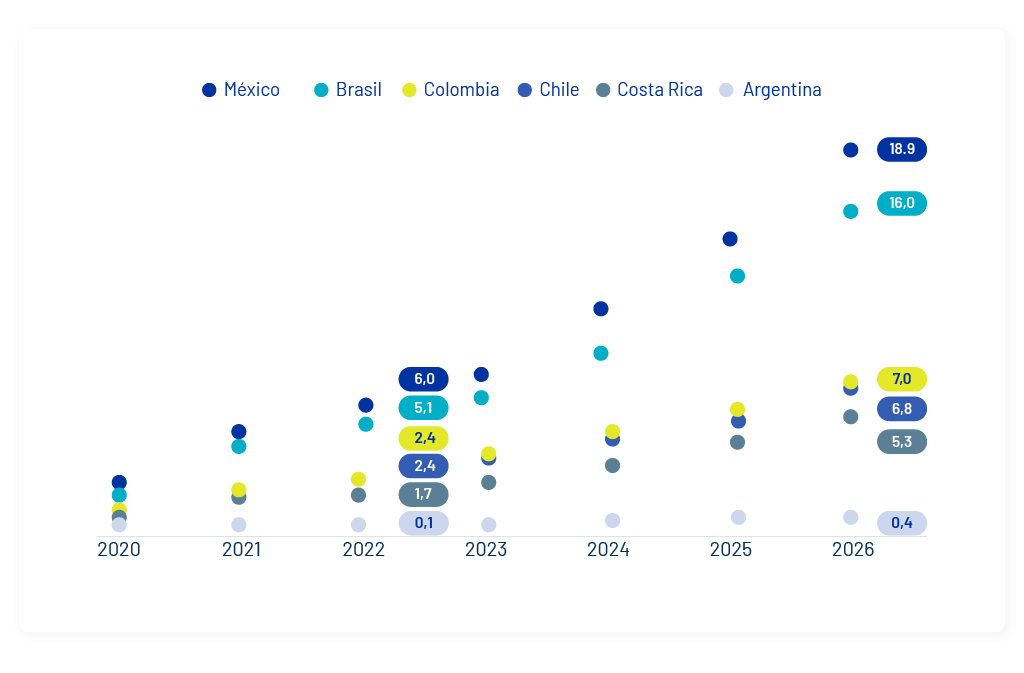
"An electric motor has an energy efficiency of almost 90% compared to an energy efficiency of 30% for an internal combustion engine. This means that of ten parts of the energy used by an electric motor, nine parts can be transmitted to the wheels. In contrast, of ten parts of the energy of an internal combustion engine, only three can be transmitted to the wheels and the rest is lost in internal movements," adds Andrade.
The rapid and efficient transition to the use of electric vehicles in Latin American cities over the next few decades will depend on several factors. Among them, the following stand out: financial and non-financial incentives that states and companies apply the environmental regulations of each territory, the charging infrastructure for the use of electric cars and the promotion of local industries.
“Latin Americans do not believe that we are facing a serious problem of sustainable mobility and this places us in front of large both cultural and legislative challenges. But I believe that the main thing to achieve a real change in sustainable mobility in our cities is to have as a horizon what we seek to resolve with this new paradigm that we seek to apply," concludes Hernán Alejandro Giraldo.
The transition to new ways of living in cities is an effort that citizens, governments and companies must undertake together. SURA InsuranceWe support this transformation process by providing reliable information in order to achieve changes that are beneficial to societies and long-lasting.